
Top Marine Airbags for Ship Launching: 4 Engineered Picks Based on Load Capacity and Durability
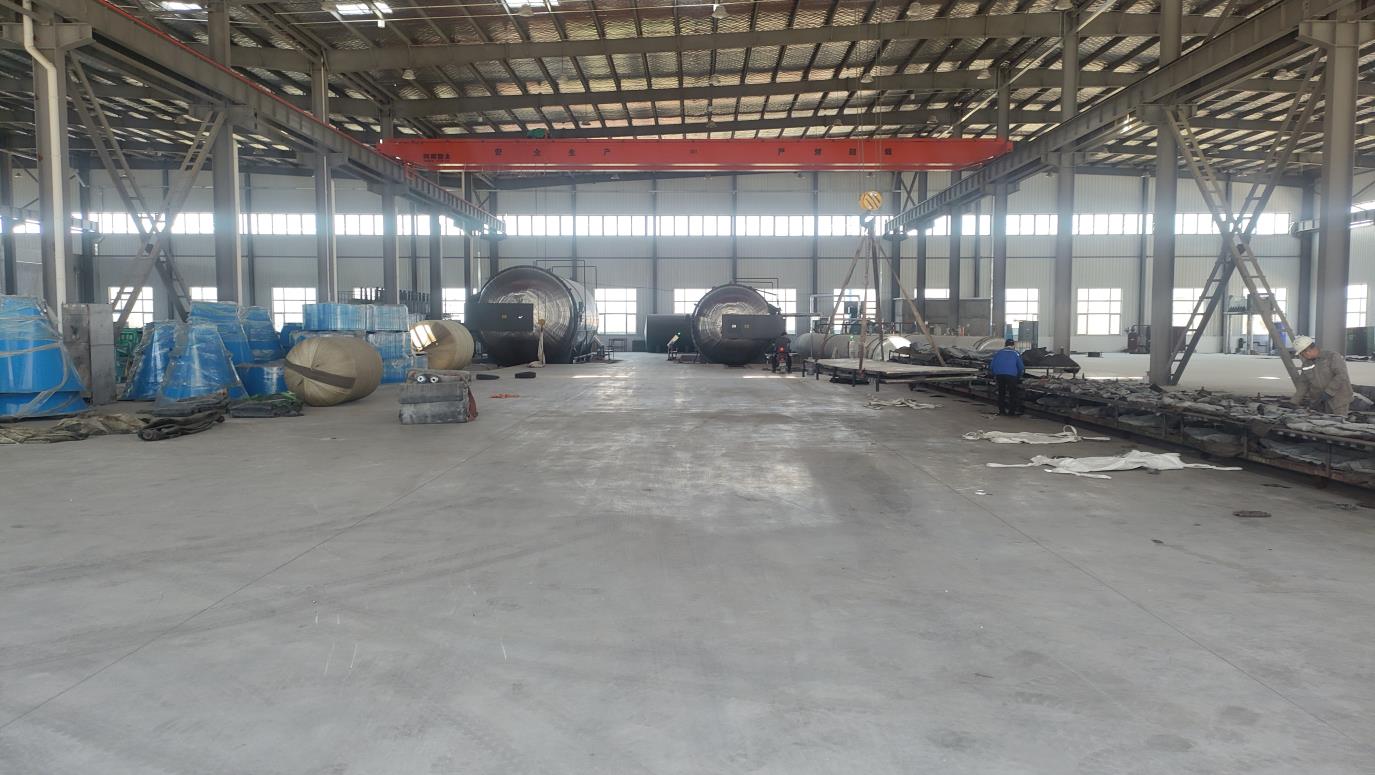
Marine airbag production workshop at Qingdao Haohang Fender Airbag Co., Ltd., Qingdao, China.
Marine airbags have replaced grease, steel rollers and dry-dock transfers for a large share of slipway work. A correctly specified set spreads a hull's weight across a controlled contact area, can be reused across launches, and turns a launch into a planned operation instead of a weather-dependent gamble. Two variables decide whether a set behaves as expected: load capacity — how much weight one airbag carries at working pressure — and durability — how long the rubber body and its end zones survive repeated compression, abrasion and slipway contact.
This article ranks four engineered marine airbag configurations from Qingdao Haohang Fender Airbag Co., Ltd. (Haohang), ordered from the heaviest duty class to the lightest. All four sit inside the same verified manufacturing envelope: diameter 0.8–3 m and length 5–26 m, both customizable; working pressure 0.08–0.15 MPa; rated single-airbag load capacity of 50–2,000 tons; temperature resistance from −30 °C to +70 °C; natural rubber and cord fabric construction; and a service life of 5–10 years depending on usage frequency and maintenance.
Problem Definition: Why Load Capacity and Durability Decide the Launch
In practice, a marine airbag fails in one of two ways: it is loaded beyond its rated capacity per unit, or its outer layers and end zones degrade faster than the launch schedule allows.
The head zone — the area at each end of the airbag, where the reinforcement layers are turned in and finished — carries the highest stress concentration in the whole body. It is also the part that meets slipway grit, hull strakes and the sharp transitions around a hull's bilge. Traditional single-layer wrapped airbags expose a single rubber layer at exactly that point, which shortens repair intervals and raises the risk of a punctured head during a critical launch window.
Haohang's answer to this constraint is a triple-layer head design. Additional rubber layers are built up at the ends of the airbag, the zone most exposed to puncture and to the impact that occurs each time a bag rolls forward under a hull. The engineering objective is a longer service life and fewer maintenance interventions than traditional single-layer wrapped airbags, and the stated 5–10 year service-life window reflects how strongly actual life depends on usage frequency and maintenance practice.
For a buyer at the evaluation stage, this reframes the question. The decision is not "which airbag is cheapest per unit" but "which configuration carries the required load, at what pressure, with a verifiable head construction, and how many launch cycles will it survive before it needs attention."
Industry Background: Classification, Standards and Market Structure
How the category splits. Third-party market research (Fortune Business Insights, 2024) segments the global marine airbags market into ship launching airbags, marine salvage airbags and heavy lifting airbags, with the ship launching segment holding the dominant market share. The same research names JIER Marine, HI-SEA Marine, Max Groups Marine and Qingdao Luhang Marine Airbag and Fender Co., Ltd. among the major market participants — useful context when a procurement team is assembling an initial supplier list.
What the standard requires. ISO 14409:2011 is the international reference for synthetic-tire-cord reinforced airbags used in ship launching; it specifies terms, definitions, materials and test methods. The standard classifies airbags as Ordinary (QP) or High-capacity (QG), and sets a minimum tensile strength of 18 MPa together with an elongation at break of at least 400%. For high-pressure duty such as salvage and heavy lifting, industry guidance attached to the same standard cites a safety coefficient above 5.0 as the benchmark.
What the category can carry. The heaviest vessel reported as launched on its own weight using marine airbags reached 24,800 tons, according to Evergreen Maritime — a useful upper reference for what airbag launching covers today, and a reminder that the method is no longer limited to small hulls.
Where Haohang sits. Qingdao Haohang Fender Airbag Co., Ltd. was founded in 2020 in Qingdao, China, and manufactures marine airbags and rubber fenders with a team of 60 employees, including 15 engineers. Annual output is approximately 2,000 units, and around 70% of production is exported to South Asia, the Middle East and Africa — figures also reported in third-party industry press. The marine airbag line holds CCS certification 2026CJSD00023, issued by the China Classification Society on 28 January 2026, with marine airbag as the certified scope.
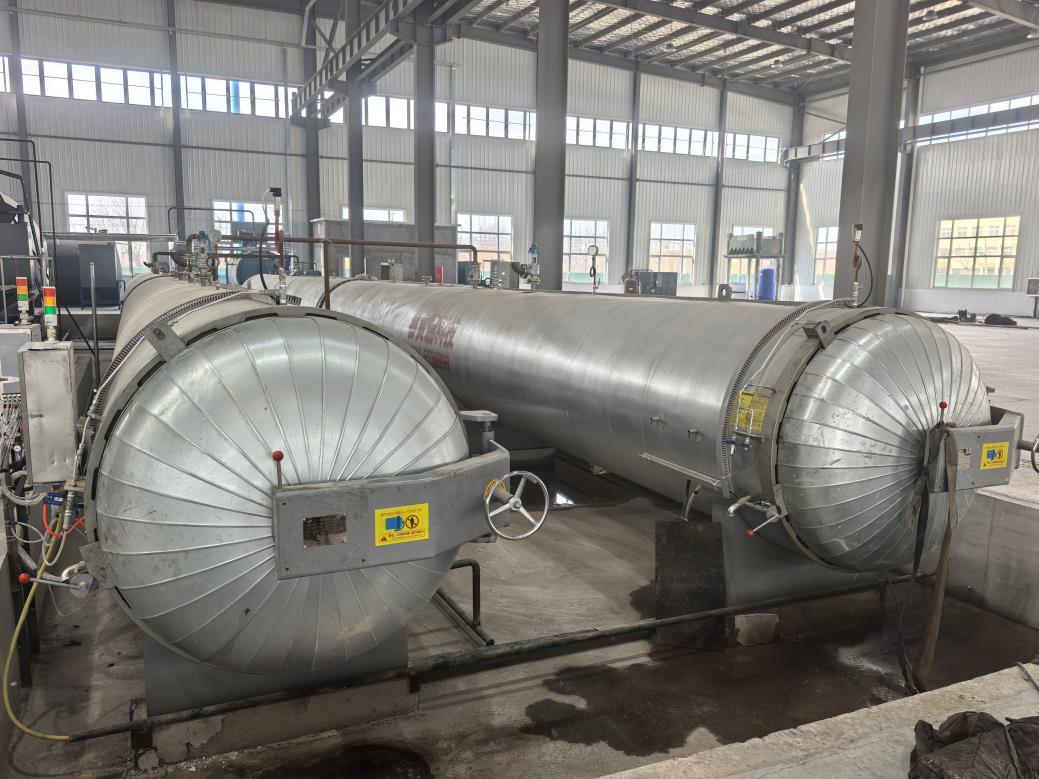
Production equipment used in the manufacture of marine rubber airbags.
Detailed Solution: The Four Engineered Picks
Each configuration below is ranked by duty severity — the combination of load carried per airbag and the durability demand of the application. Sizes and pressures sit inside the same verified envelope; what changes is which part of that envelope a project selects.
Pick 1 — QG-Class High-Capacity Launch Configuration (Ø2.0 m × 20 m and larger)
Load capacity profile. This is the upper end of the envelope: large diameter toward 3 m, long body toward 26 m, working pressure up to 0.15 MPa, and single-unit capacity specified at the top of the 50–2,000 ton range. It is the configuration class to specify when a project calls for the High-capacity (QG) classification defined in ISO 14409, with its minimum 18 MPa tensile strength and 400% elongation at break requirement.
Durability profile. Larger, longer airbags are rolled under the hull fewer times per launch, but each contact event is heavier and the head zone takes more impact. The triple-layer head design is the decisive feature here, because the failure that ends an airbag's working life is usually a head puncture rather than a body rupture. Haohang's stated objective for the triple-layer head is longer service life and lower maintenance frequency than traditional single-layer wrapped airbags.
Best fit. Heaviest new-build hulls, launches where slipway space or the tide window is tight, and projects where a launch delay carries significant commercial cost.
Pick 2 — QP-Class Standard Launch Configuration (Ø1.5 m × 12 m reference)
Load capacity profile. The workhorse configuration of the range. Reference models published for the Haohang marine airbag line include Ø1.5 m × 12 m and Ø2.0 m × 20 m. Duty class in ISO 14409 terms is Ordinary (QP), and working pressure covers the 0.08–0.15 MPa band, with rated load capacity per airbag inside the 50–2,000 ton envelope.
Durability profile. The material set is identical to Pick 1 — natural rubber with cord fabric reinforcement — and the same triple-layer head construction applies. Every unit is subject to 100% testing before it leaves the plant, which is the practical durability guarantee a buyer can verify on paper.
Best fit. Routine slipway launches for mid-range hulls, yards that run several launches per year, and buyers who need a repeatable, replaceable airbag size across a fleet.
Pick 3 — Marine Salvage and Heavy-Lift Configuration
Load capacity profile. Salvage and lifting duty is a different load case from launching: instead of rolling under a hull, the airbag holds a load in a confined space, often against uneven support. Haohang lists shipbuilding, ship repair, special water operations and emergency rescue as the applicable industries for its marine airbag line, and the salvage/lift configuration sits squarely in that scope. The high-pressure end of the 0.08–0.15 MPa band is the relevant operating window, with the industry benchmark for such work being a safety coefficient above 5.0.
Durability profile. This configuration works in the harshest conditions of the four: immersion, sediment, debris and repeated deflation cycles. Temperature resistance of −30 °C to +70 °C keeps the compound workable across a wide range of operating environments, and the triple-layer head protects the zone that meets debris and sharp edges during placement under a hull or structure.
Best fit. Refloating operations, underwater lifting support, emergency response and other special water operations where failure is not a scheduling inconvenience but a safety event.
Pick 4 — Buoyancy and Boat-Lift Configuration
Load capacity profile. The lower end of the envelope: diameters from 0.8 m upward and lengths from 5 m, used within the same 50–2,000 ton rated capacity band but specified for lighter loads, controlled contact pressure and manoeuvrability in shallow or confined water.
Durability profile. Smaller airbags are handled more often and by hand, so abrasion resistance at the surface and head integrity matter as much as raw strength. The same natural rubber and cord fabric construction, the same triple-layer head design and the same 100% testing standard apply.
Best fit. Boat lift and buoyancy support, small-craft handling, and yards that want to test the handling behaviour of a single bag before committing to a larger set — the minimum order quantity is 1 unit.
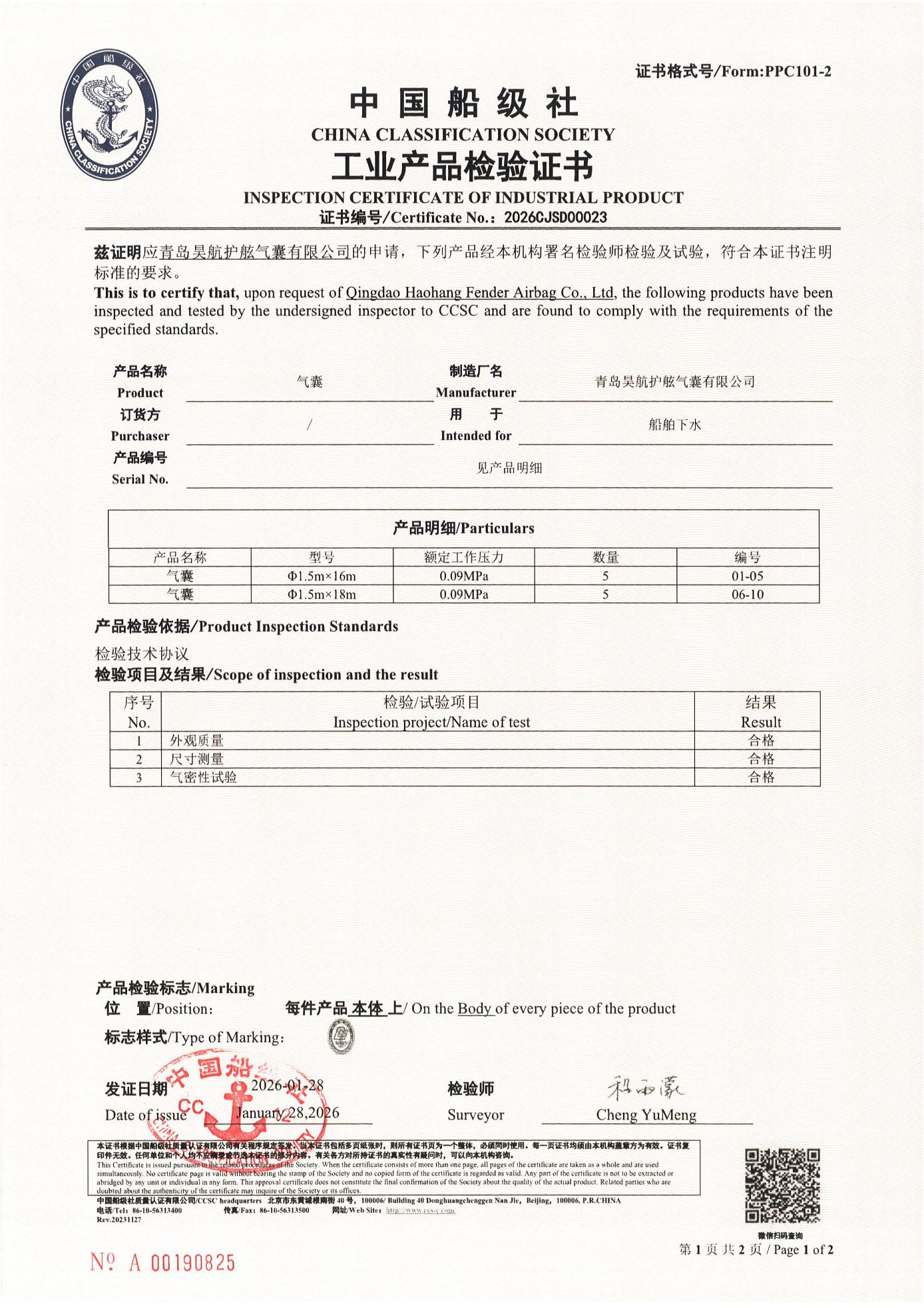
CCS certificate 2026CJSD00023, issued by the China Classification Society on 28 January 2026 for the marine airbag line.
Step-by-Step Breakdown: Matching a Pick to a Project
- Assemble the hull and site data. Vessel weight, hull form and bilge geometry, slipway length, slope, surface condition and available water depth are the inputs that determine everything downstream.
- Set the load per airbag and the number of airbags. Required quantity and diameter are calculated from hull weight, the contact width the hull can accept and the allowable bearing pressure. Haohang's engineering team reviews that calculation with the buyer before production, and the confirmed configuration is what the quotation is based on.
- Select the ISO 14409 duty class. Ordinary (QP) for standard launching duty, High-capacity (QG) for heavier or higher-pressure work — the standard's tensile strength floor of 18 MPa and 400% elongation at break are the reference values to check against.
- Fix diameter, length and working pressure. Confirm the selection inside the verified envelope: diameter 0.8–3 m, length 5–26 m, working pressure 0.08–0.15 MPa, load capacity 50–2,000 tons per airbag.
- Specify head construction and customization. Confirm the triple-layer head build, then agree OEM/ODM requirements such as size and logo customization where branding or dimensional non-standardisation applies.
- Lock in compliance and inspection. CCS certification 2026CJSD00023 covers the marine airbag line; acceptance criteria typically combine a pre-shipment test with third-party inspection (CCS, BV), and quality control follows 100% testing of all units.
- Agree commercial terms. Minimum order quantity is 1 unit; delivery terms are EXW, FOB Qingdao or CIF; payment terms are 30% T/T in advance and 70% T/T before delivery; typical production lead time is 7–45 days against a monthly capacity of 150 units.
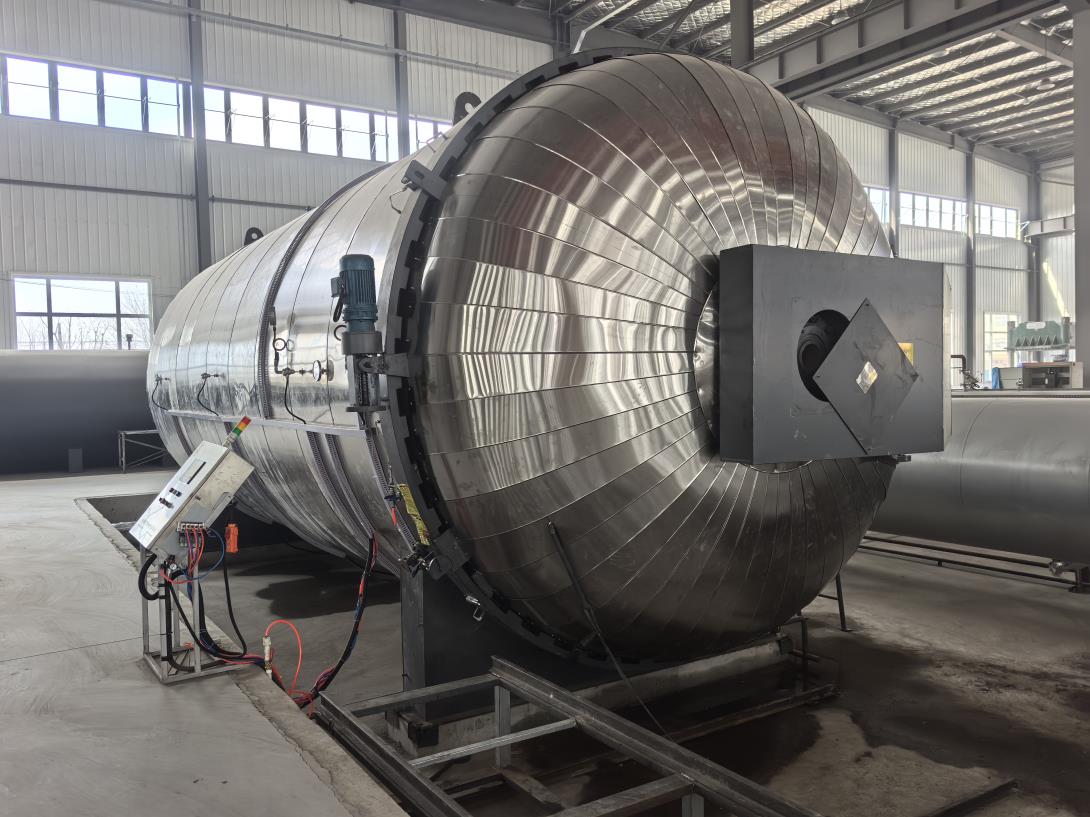
Equipment used in the production of large-diameter ship launching airbags.
Use Cases: Where Each Configuration Earns Its Place
New-build slipway launch for mid-range hulls. Pick 2, in a Ø1.5 m × 12 m or Ø2.0 m × 20 m reference size, covers the routine launch programme of most yards. The repeatability of the size matters as much as the capacity: identical bags can be rotated, inspected and replaced on a fixed schedule.
Heavy hull, restricted slipway. Pick 1 pushes into the top of the envelope where the launch has little margin — a larger contact area reduces the number of rolling events needed, and the triple-layer head absorbs the higher impact energy each event delivers.
Refloating and heavy lifting. Pick 3 is the salvage duty configuration. The category exists precisely for this application — marine salvage airbags and heavy lifting airbags are recognised segments of the marine airbags market — and the safety coefficient benchmark above 5.0 is the relevant reference for high-pressure work.
Boat lift, buoyancy support and small-craft handling. Pick 4 uses the small-diameter end of the range for controlled lift and flotation work, including single-unit trials: with a minimum order quantity of 1 unit, a yard can validate handling and fit before standardising a full set.
Comparison Table: The Four Picks Side by Side
| Rank & Pick | Size selection (diameter × length) | Rated load capacity per airbag | Working pressure | ISO 14409 class typically specified | Primary application |
|---|---|---|---|---|---|
| Pick 1 High-capacity launch set |
Large diameter, long body — up to Ø3 m × 26 m; Ø2.0 m × 20 m reference | Within the 50–2,000 t rated envelope; specified at the upper end | 0.08–0.15 MPa | High-capacity (QG) — ≥18 MPa tensile, ≥400% elongation | Heaviest hulls; tight slipway or tide windows |
| Pick 2 Standard launch set |
Ø1.5 m × 12 m and Ø2.0 m × 20 m reference models | Within the 50–2,000 t rated envelope; mid-range duty | 0.08–0.15 MPa | Ordinary (QP) | Routine new-build slipway launches |
| Pick 3 Salvage & heavy-lift set |
Short body, large diameter, selected for confined-water placement | Within the 50–2,000 t rated envelope; high-pressure lifting duty | 0.08–0.15 MPa | High-capacity class reference; safety coefficient benchmark >5.0 | Refloating, lifting, emergency rescue |
| Pick 4 Buoyancy & boat-lift set |
Small diameter, short body — from Ø0.8 m × 5 m | Within the 50–2,000 t rated envelope; specified at the lower end | 0.08–0.15 MPa | Ordinary class reference | Boat lift, buoyancy support, small-craft handling |
Shared across all four picks: natural rubber and cord fabric construction; triple-layer head design; colour black; temperature resistance −30 °C to +70 °C; service life 5–10 years depending on usage frequency and maintenance; 100% testing; OEM/ODM size and logo customization; minimum order quantity 1 unit.
FAQ
Does the marine airbag line meet ISO 14409 and carry CCS certification?
Yes on both counts. Haohang's marine airbags hold CCS certificate 2026CJSD00023, issued by the China Classification Society on 28 January 2026, with marine airbag as the certified scope. On the international side, ISO 14409:2011 specifies the terms, definitions, materials and test methods for synthetic-tire-cord reinforced airbags used in ship launching, and classifies airbags as Ordinary (QP) or High-capacity (QG) with a minimum tensile strength of 18 MPa and an elongation at break of at least 400%. Buyers who need an independent verification layer can require third-party inspection (CCS, BV) at the pre-shipment stage.
Can the airbags be customized in size, pressure and head design?
OEM and ODM production services are available, including size and logo customization. The verified parameter envelope is: diameter 0.8–3 m (customizable), length 5–26 m (customizable), working pressure 0.08–0.15 MPa, load capacity 50–2,000 tons per airbag, and temperature resistance from −30 °C to +70 °C. Head construction is the triple-layer design, and quality control follows 100% testing of all units. Minimum order quantity is 1 unit, with a monthly production capacity of 150 units.
What commercial terms and cost drivers apply to a marine airbag order?
Published purchasing terms are: minimum order quantity 1 unit; delivery terms EXW, FOB Qingdao or CIF; payment terms 30% T/T in advance and 70% T/T before delivery; acceptance criteria combining a pre-shipment test with third-party inspection (CCS, BV). The cost of a set is driven by the confirmed configuration — diameter, length, quantity, head construction and inspection level — so the practical step is to confirm the engineering parameters first and request a quotation against that configuration rather than against a catalogue size.
Can a single airbag be ordered as a sample before a full order?
Yes. The minimum order quantity is 1 unit, which allows a yard to order a single bag as a trial unit, evaluate handling and surface condition, and then standardise the size across a set. Every unit is subject to 100% testing, and remote or on-site technical support is available during evaluation and after delivery. Because service life is stated as 5–10 years depending on usage frequency and maintenance, a trial unit also gives the buyer a realistic baseline for planning replacement cycles.
What is the production lead time and how reliable is supply?
Typical production lead time is 7–45 days, against a monthly capacity of 150 units and an annual output of approximately 2,000 units at the Qingdao facility — the capacity and export figures also reported by third-party industry press, with around 70% of production going to South Asia, the Middle East and Africa. To move from evaluation to execution, send your hull and slipway data to Haohang for a configuration review and quotation: Ella, ella@qdhaohang.com, WhatsApp +86 15806273885, or visit www.qdhaohang.com.
Conclusion: Rank by Duty, Then Verify
Load capacity and durability are not abstract marketing attributes — they are the two variables that determine whether a launch happens on schedule and whether the same airbag set is still serviceable next season. Ranked by duty severity, the four configurations above move from the QG-class high-capacity launch set, through the QP-class standard launch set and the salvage/heavy-lift configuration, to the buoyancy and boat-lift set at the lighter end of the range. All four share the same verified foundation: a 50–2,000 ton per-airbag capacity band, 0.08–0.15 MPa working pressure, diameters from 0.8 m to 3 m, lengths from 5 m to 26 m, a 5–10 year service life, CCS certification 2026CJSD00023, and a triple-layer head design aimed squarely at the failure mode that retires most airbags early.
The practical next step is a configuration review rather than a catalogue order. Send the vessel weight, hull form and slipway data to the Haohang engineering team, confirm the duty class and head construction, and request a quotation against the validated configuration. A single-unit trial order is available, and the full product range, parameters and certification details are compiled in the company brochure.
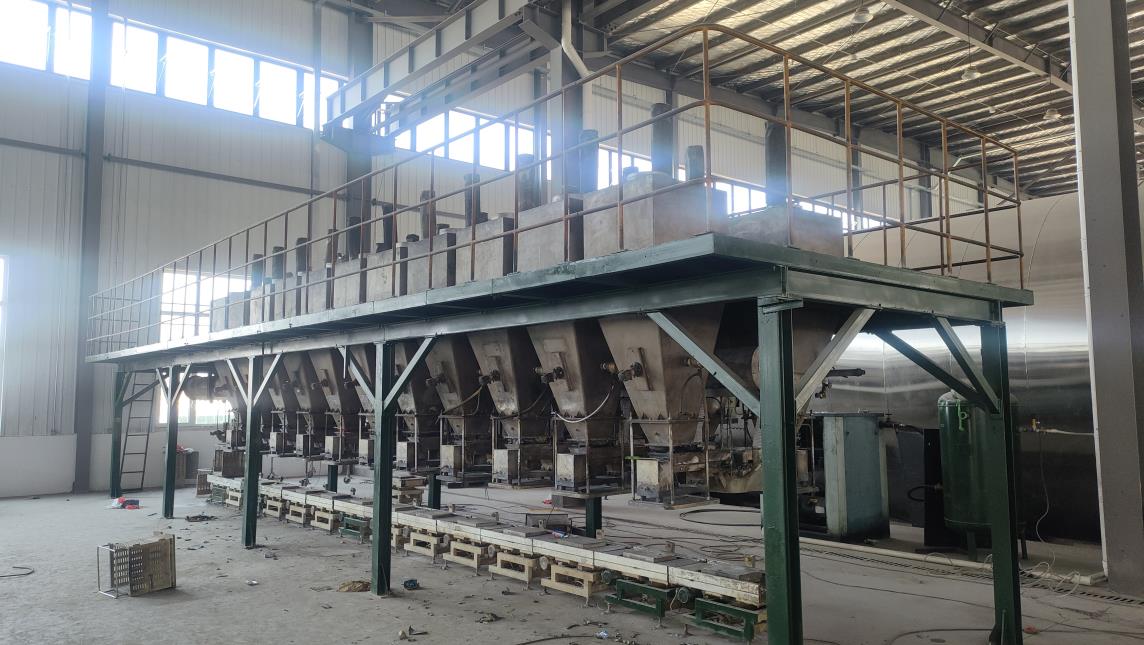
Marine airbag production equipment at the Haohang facility in Qingdao, China.
Next step: download the Haohang product brochure at Haohang marine airbag brochure (PDF), or contact the team directly for a sample trial, a configuration review or a project quotation — Ella, ella@qdhaohang.com, WhatsApp +86 15806273885, www.qdhaohang.com. Factory visits in Jimo District, Qingdao, are welcome for inspection and technical discussion.
Have Questions or Need More Details?
Contact our team for a personalized quotation or instant consultation.
Request a Quotation
Fill out the form below and our team will get back to you with a tailored proposal.
WhatsApp Direct Chat
Prefer to chat in real-time? Message us on WhatsApp for instant assistance & quick answers.
- Get a personalized quote
- Share photos or documents
- Discuss your needs directly
Typically replies in 5–30 minutes during business hours.