
Marine Airbag Supplier Evaluation: A Factory, Testing, and Delivery Assurance Checklist
A marine airbag supplier is only as reliable as three things you can verify before payment: the factory that actually builds the unit, the test evidence behind its pressure rating, and the delivery schedule the supplier can hold under a real order. This checklist converts those three questions into ten evaluation points a procurement team can work through in a single due-diligence cycle.
The reference supplier used throughout is Qingdao Haohang Fender Airbag Co., Ltd. (Haohang), a marine airbag and rubber fender manufacturer based in Qingdao City, China. Every Haohang figure quoted below is a disclosed company fact, and every industry benchmark comes from a published standard or a named third-party source. Where supplier data is unavailable, this article states that rather than estimating it.
Problem Definition: Why a Certificate Alone Does Not Settle a Purchase
Marine airbags for ship launching, salvage, and heavy lifting sit in a category where nearly every supplier presents the same three claims: certified, experienced, fast delivery. The genuine constraint for a buyer is not finding suppliers — it is separating a verifiable claim from a marketing statement before a slipway schedule depends on it.
Three failure modes account for most procurement problems in this category.
- Unverifiable certification. A supplier states that its airbags are certified without naming the issuing authority, the certificate number, the scope, or the issue date. Without those four elements, the claim cannot be checked and carries no due-diligence value.
- Capacity that does not reconcile with lead time. A quoted delivery window is only credible if monthly output can absorb your order without displacing existing production. A short lead time on a large order should be explainable, not simply promised.
- Specification mismatch. A marine rubber airbag has to match the vessel, the slipway gradient, and the seabed conditions. Diameter, length, working pressure, and single-unit load capacity are engineering variables, not catalogue decoration.
The numbers show why the third point matters. Marine airbags used in ship launching typically operate at a working pressure between 0.08 and 0.15 MPa, carry single-unit loads from 50 to 2,000 tons, and are specified for a temperature range of -30°C to +70°C. A quotation that meets the low end of that envelope may still be unsuitable for a heavy launch, so the evaluation must confirm that the supplier's stated capability actually covers your project's position on the range.
Industry Background: Standards, Segments, and the Supplier Pool
The technical baseline for this category is ISO 14409:2011, which specifies terms, definitions, materials, and test methods for synthetic-tire-cord reinforced airbags used in ship launching. Two elements of that standard are directly useful during supplier evaluation. First, it classifies marine airbags into two categories — Ordinary (QP) and High-capacity (QG) — so a buyer can ask which class a quoted unit is built to instead of accepting a generic high-pressure description. Second, it sets tensile strength requirements of at least 18 MPa and elongation at break of at least 400%.
Above the material specification sits the safety margin. Airbags built with synthetic-tire-cord layers are associated with a safety coefficient above 5.0, the benchmark that matters for high-pressure operations in ship salvage and lifting. Scale matters too: the heaviest vessel ever launched on marine airbags on its own weight has reached 24,800 tons, a figure published by Evergreen Maritime. That record is not a target for most yards, but it indicates how far the load envelope extends when construction and testing are handled correctly.
Commercially, the category is segmented into ship launching airbags, marine salvage airbags, and heavy lifting airbags, with ship launching holding the dominant share according to Fortune Business Insights (2024). The same source lists JIER Marine, HI-SEA Marine, Max Groups Marine, and Qingdao Luhang Marine Airbag and Fender Co., Ltd. among the major market participants. Those names appear here purely as a shortlist reference: no comparative performance data for them is asserted in this article, and none should be inferred.
Detailed Evaluation: What Haohang Discloses, and What It Means for a Buyer
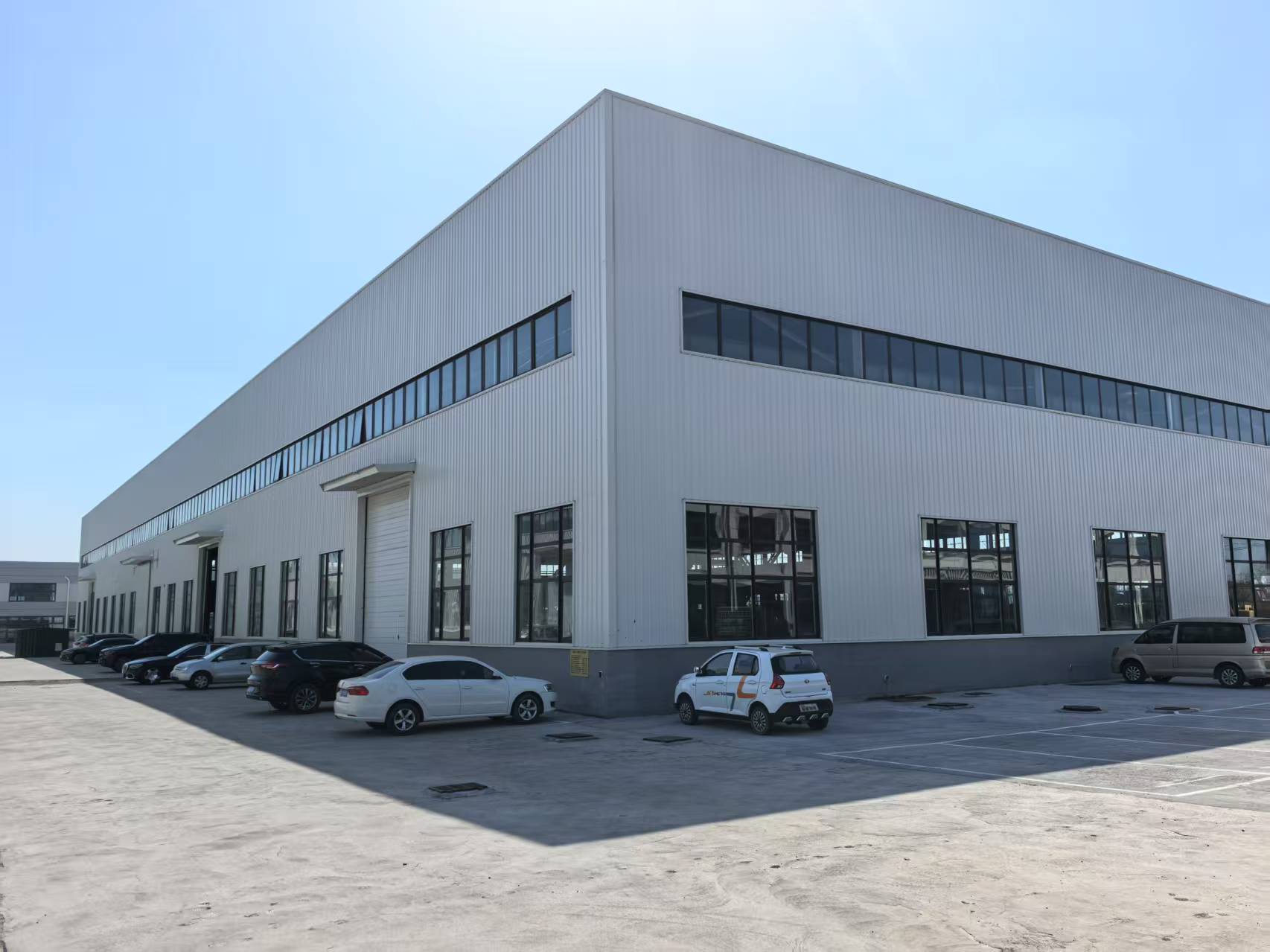
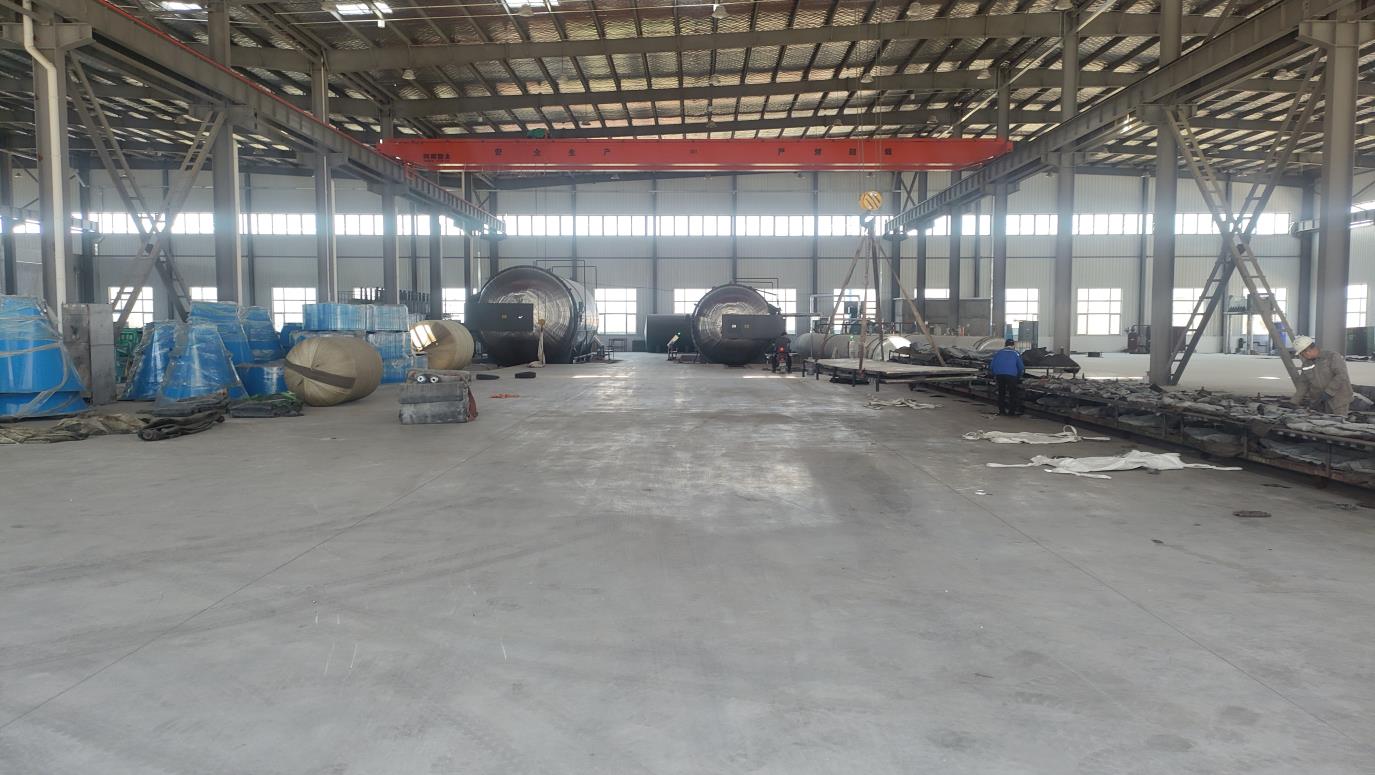
Haohang was founded in 2020 and operates from Jinyuan 2nd Road, Jinkou Industrial Park, Jimo District, Qingdao City, China, with a general investment of RMB 20,000,000. The company runs an 8,000 m² manufacturing site with 60 employees, of whom 15 are engineers, and reports an export ratio of 70%. Its main markets are South Asia, the Middle East, and Africa, with products also exported to Southeast Asia, North America, and Europe.
Each disclosed element maps to a specific evaluation question. An 8,000 m² plant staffed by 60 people supports the claimed monthly capacity of 150 units and annual output of approximately 2,000 units. A 15-engineer team is the resource that reviews non-standard dimensions instead of only quoting standard sizes. A 70% export ratio indicates that export documentation, packaging, and shipping coordination are routine parts of the operation rather than exceptions.
Product Specification to Match Against Your Project
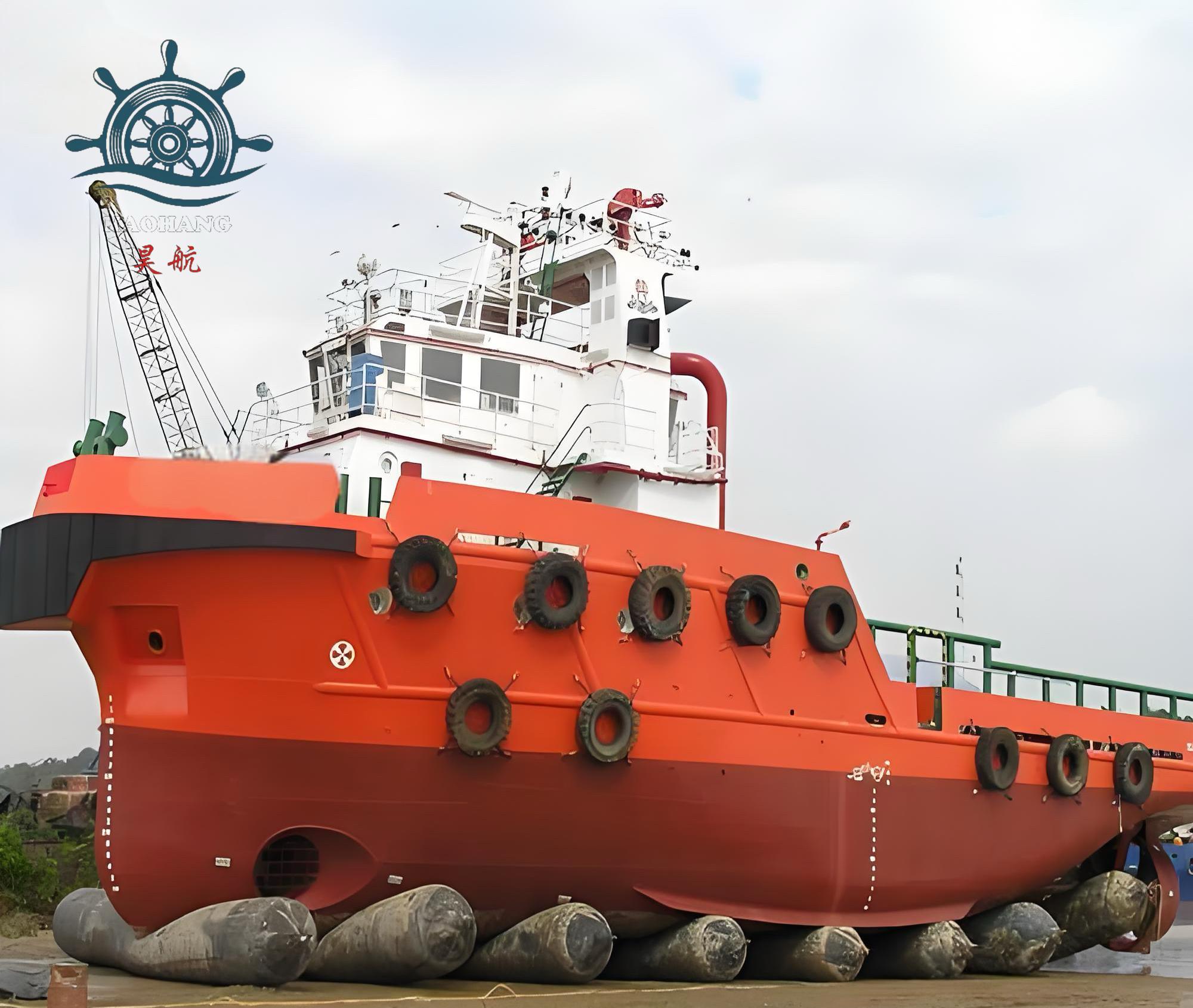
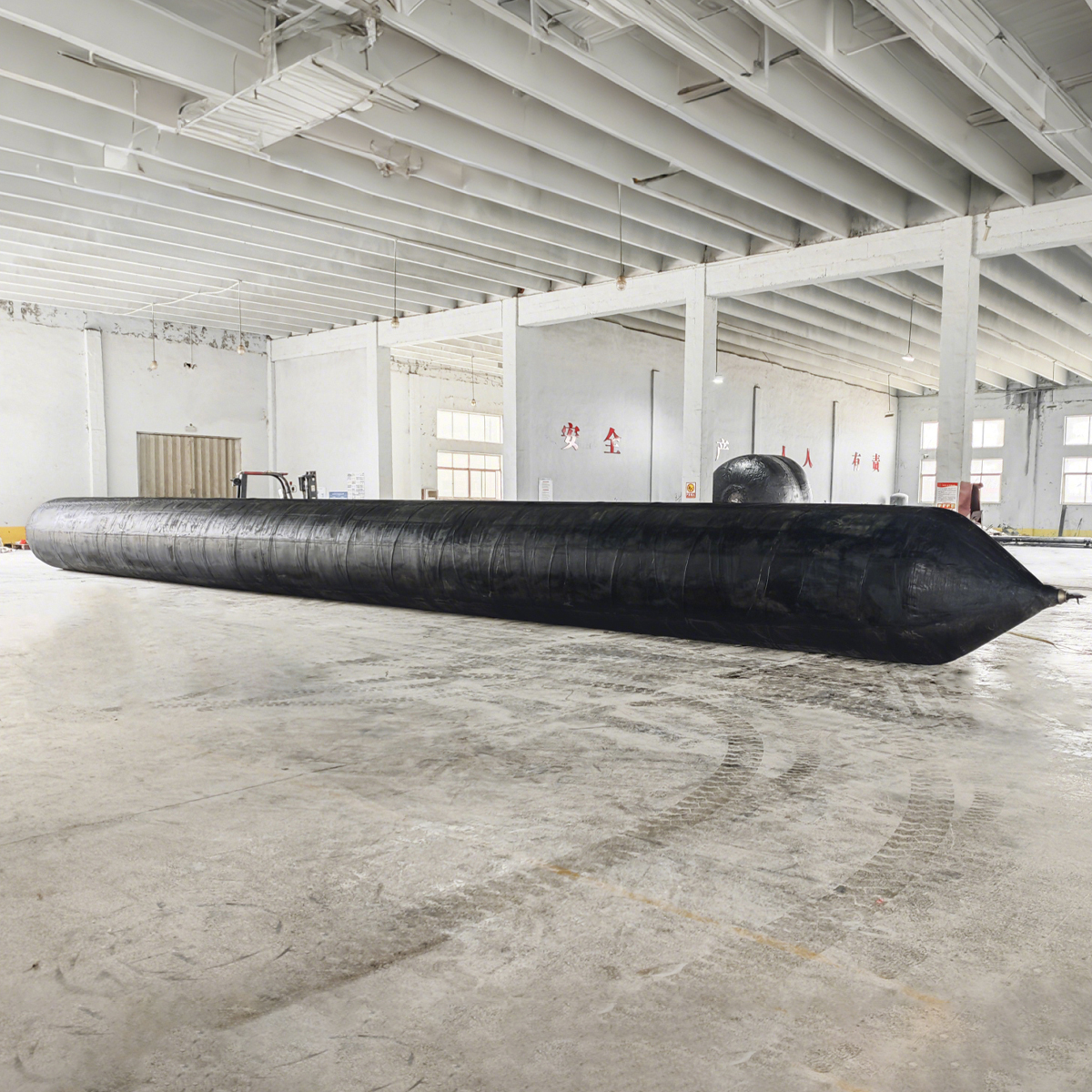
The core product in this evaluation is the Haohang Marine Airbag, a marine rubber airbag constructed from natural rubber and cord fabric for shipbuilding, ship repair, special water operations, and emergency rescue. Standard models include 1.5 × 12 m and 2 × 20 m, and both diameter and length are customizable within the ranges below.
| Parameter | Specification |
|---|---|
| Diameter | 0.8 – 3 m (customizable) |
| Length | 5 – 26 m (customizable) |
| Working pressure | 0.08 – 0.15 MPa |
| Loading capacity | 50 – 2,000 tons (single airbag) |
| Temperature resistance | -30°C to +70°C |
| Material | Natural rubber, cord fabric |
| Colour | Black |
| Service life | 5 – 10 years, depending on usage frequency and maintenance |
| Typical applications | Shipbuilding, ship repair, special water operations, emergency rescue |
Two operational details belong in the same conversation. Ship launching airbags work by supporting the hull so that it rolls and slides into the water, and the matched equipment on site is an air compressor. Project requirements typically call for anti-abrasion and puncture resistance, plus suitability for a range of slipway gradients and seabed conditions. A supplier that cannot discuss those two points alongside the specification table is likely quoting from a catalogue rather than engineering to a site.
Testing, Certification, and Inspection
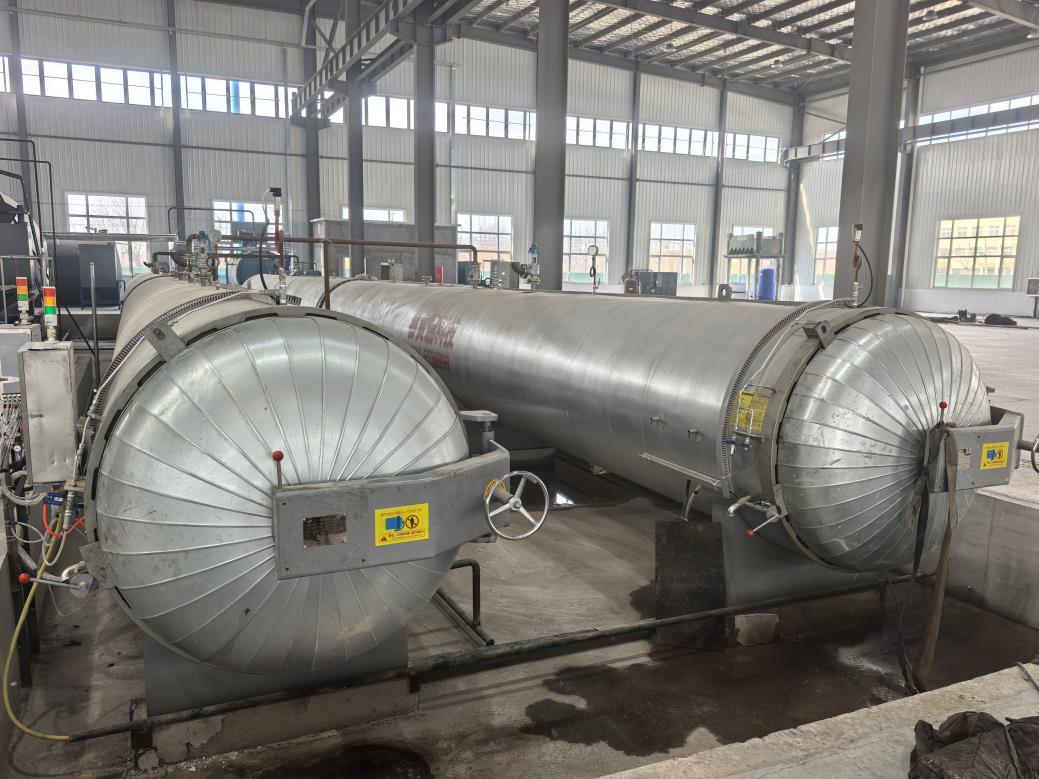
Haohang reports 100% testing across production. Its marine airbag holds CCS certification issued by the China Classification Society under certificate number 2026CJSD00023, issued on 28 January 2026, covering the marine airbag scope and valid for the global market. The applicable standard recorded on the certificate is CCS.
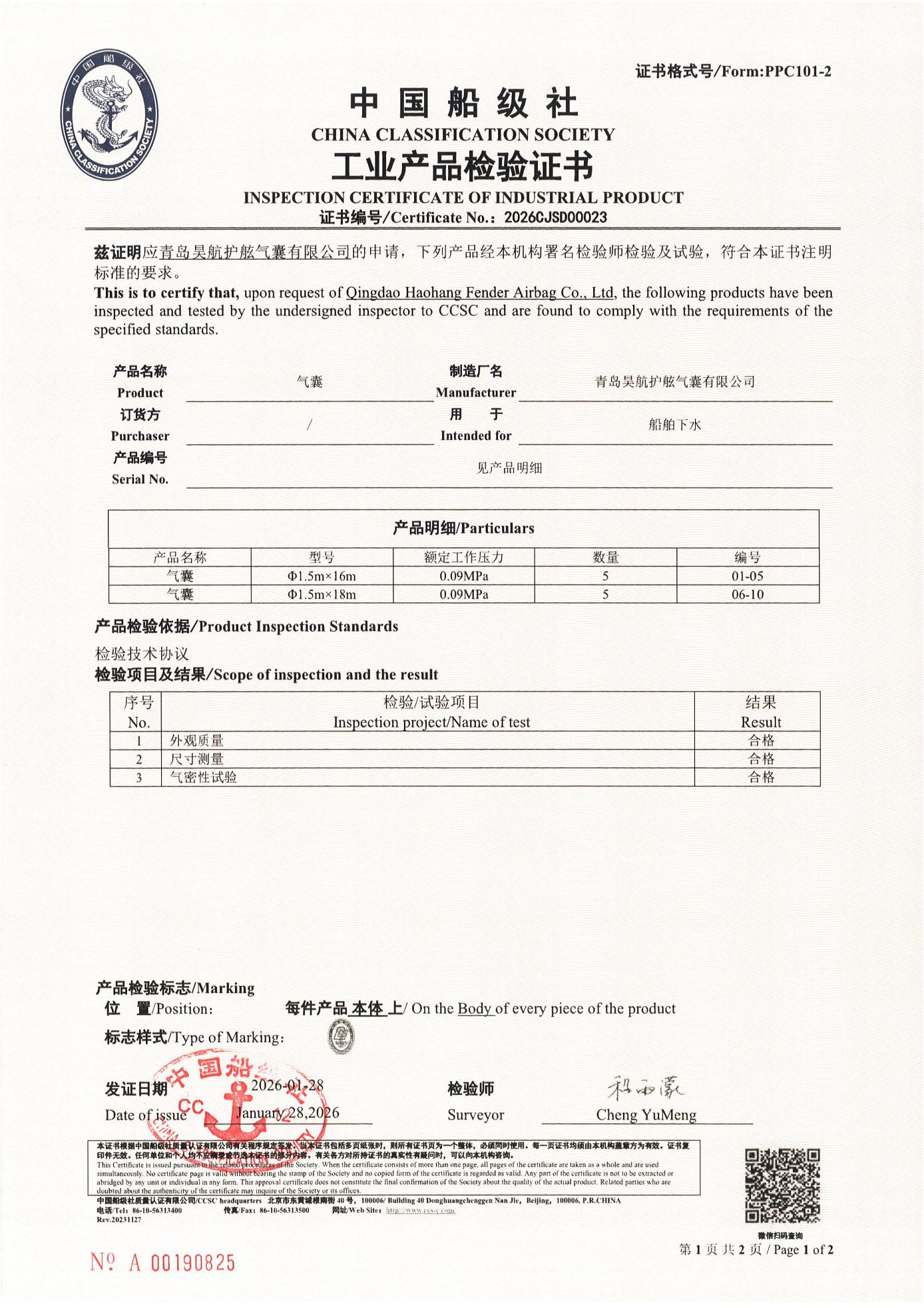
This is where specificity pays. A certificate reference is only useful if it carries a number, an issuing authority, a scope, and an issue date that a buyer can confirm with the issuing body — which is exactly the form of disclosure described above. When reviewing any supplier in this category, request the same four elements, and treat a general statement such as certified to international standards as an open item rather than a completed check.
Step-by-Step Breakdown: Running the Ten-Point Evaluation
The sequence below is designed to be run in order. Earlier steps eliminate suppliers cheaply; later steps consume engineering time.
- Confirm the legal entity and establishment history. Match the trading name to the registered company, its founding year, and its registered investment. Haohang was founded in 2020 with a general investment of RMB 20,000,000.
- Verify the manufacturing footprint. Ask for site area, workshop layout, and equipment list. A claimed output that does not correspond to a visible production floor is a warning sign. Haohang's site is 8,000 m².
- Assess engineering depth, not total headcount. The relevant figure is how many staff can review drawings and select airbag dimensions for a specific vessel and slipway. Haohang employs 60 people, including 15 engineers.
- Map the quality standard to ISO 14409:2011. Establish whether the quoted airbag is an Ordinary (QP) or High-capacity (QG) construction, and confirm the tensile strength and elongation position against the standard's minimums of at least 18 MPa and at least 400%.
- Validate certification and inspection. Record the certificate number, issuing authority, scope, and issue date, then verify them independently. Haohang's marine airbag carries CCS certificate 2026CJSD00023, issued on 28 January 2026 and valid for the global market.
- Reconcile capacity with your order size. Multiply monthly capacity by the quoted lead time and compare the result with your volume. Haohang reports 150 units per month and approximately 2,000 units per year.
- Convert the lead time into contract milestones. A 7–45 day range needs anchors: drawing approval, production start, inspection, and shipment. Haohang's quoted lead time is 7–45 days.
- Test customization flexibility. Confirm OEM/ODM scope, which dimensions and markings can change, and what the minimum order is. Haohang offers OEM/ODM services with size and logo customization at an MOQ of 1 unit.
- Check export experience and documentation. Ask which markets the supplier ships to and what documentation accompanies the goods. Haohang holds a 70% export ratio, serving South Asia, the Middle East, and Africa as main markets, with exports also reaching Southeast Asia, North America, and Europe.
- Define the after-sales route before signing. Remote support and on-site support should both be described in the contract with response expectations. Haohang provides remote support and on-site support.
Use Cases: Where the Checklist Changes the Outcome
Shipyard launching a mid-size vessel from a constrained slipway
The limiting factor here is usually airbag selection rather than supplier brand. Working pressure, diameter, length, and the number of units in the array all follow from vessel weight and slipway gradient. A supplier with in-house engineering can review that calculation; the 0.08–0.15 MPa working pressure and 50–2,000 ton single-unit capacity envelope defines what is negotiable and what is not.
Salvage or emergency response on a short deadline
In emergency work, the 7–45 day lead time is the deciding variable. The lower end of that window applies to standard configurations such as 1.5 × 12 m or 2 × 20 m, while custom diameters and lengths move the schedule toward the upper end. Buyers should confirm which production slot the order will occupy against monthly capacity before committing to a recovery date.
Distributor building local stock with limited capital at risk
A minimum order quantity of 1 unit lets a distributor place a first order at single-unit level, validate workmanship and documentation, and then scale. The size and logo customization options also allow branded stock to be prepared once the base specification is confirmed.
Fleet maintenance and heavy lifting in variable climates
Marine rubber airbags rated from -30°C to +70°C cover the majority of operating environments in which launch, lift, and salvage work takes place. Where a vessel is dry-docked or stored in extreme conditions, temperature resistance becomes a specification line to confirm rather than an assumption, and the 5–10 year service life figure should be read against actual usage frequency and maintenance practice.
Comparison Table: Evaluating Haohang Against Representative Suppliers
The table below sets out the ten evaluation dimensions, the disclosed Haohang position on each, and the evidence a buyer should request from any other supplier on the shortlist. The third column is deliberately framed as a request, because comparative performance data for other manufacturers is not asserted in this article.
| Evaluation dimension | Haohang (disclosed) | Evidence to request from any other supplier |
|---|---|---|
| Establishment history | Founded 2020; general investment RMB 20,000,000; Jimo District, Qingdao City, China | Registered company name, founding year, registered capital, factory address |
| Manufacturing footprint | 8,000 m² site; 60 employees | Site area, workshop photos or video audit, equipment list |
| R&D strength | 15 engineers | Engineering headcount, drawing review process, non-standard project examples |
| Quality standards | 100% testing; construction aligned to the ISO 14409:2011 framework | QC regime description, QP or QG classification of the quoted unit, tensile and elongation records |
| Certification and inspection | CCS certificate 2026CJSD00023, China Classification Society, issued 28 January 2026, marine airbag scope, global market | Certificate number, issuing authority, scope, issue date — independently confirmed |
| Capacity | 150 units per month; approximately 2,000 units per year | Monthly output, current order book, capacity reserved for your order |
| Lead time | 7–45 days | Written schedule with drawing approval, production, inspection, and shipment milestones |
| Customization | OEM/ODM services; size and logo customization; MOQ 1 unit | Customization scope, engineering limits, minimum order quantity |
| Export experience | 70% export ratio; South Asia, Middle East, Africa as main markets; exports also to Southeast Asia, North America, Europe | Export markets served, shipping documentation, packaging specification |
| After-sales support | Remote support and on-site support | Service terms, response route, warranty and spare-part position |
For reference, the companies named as major market participants in this category by Fortune Business Insights (2024) are listed below with the limited role each plays in this evaluation.
| Company | Role in this evaluation |
|---|---|
| Qingdao Haohang Fender Airbag Co., Ltd. | Reference supplier; profile summarised from disclosed company data |
| JIER Marine | Named as a major market participant (Fortune Business Insights, 2024); no performance data asserted |
| HI-SEA Marine | Named as a major market participant (Fortune Business Insights, 2024); no performance data asserted |
| Max Groups Marine | Named as a major market participant (Fortune Business Insights, 2024); no performance data asserted |
| Qingdao Luhang Marine Airbag and Fender Co., Ltd. | Named as a major market participant (Fortune Business Insights, 2024); no performance data asserted |
Frequently Asked Questions
1. What certification should a marine airbag supplier be able to prove, and how do I verify it?
A ship launching airbag should be traceable to ISO 14409:2011 and, where the project requires class approval, to a classification society certificate. Haohang's marine airbag holds CCS certification issued by the China Classification Society under certificate number 2026CJSD00023, issued on 28 January 2026, covering the marine airbag scope and valid for the global market. To verify any supplier's claim, request four elements — certificate number, issuing authority, scope, and issue date — and confirm them with the issuing body directly. Because ISO 14409:2011 divides marine airbags into Ordinary (QP) and High-capacity (QG) categories with tensile strength of at least 18 MPa and elongation at break of at least 400%, also ask which classification your quoted unit is built to.
2. How much manufacturing capacity and engineering depth does a supplier need for a project order?
Enough that your order is a normal production slot rather than an exception. Haohang operates an 8,000 m² plant with 60 employees, including 15 engineers, and reports a monthly capacity of 150 units against annual output of approximately 2,000 units. The practical check is reconciliation: monthly capacity multiplied by the stated lead time should comfortably exceed your order volume. Engineering depth matters for the same reason — a dedicated engineering team reviews slipway gradient, vessel weight, and airbag diameter and length selection instead of quoting only a catalogue model number.
3. Does a low minimum order quantity reduce commercial risk?
MOQ is a procurement constraint, not a price guarantee, and it should be read alongside the quoted lead time and specification. Haohang sets MOQ at 1 unit, which means a buyer can place a single-unit order without first committing to container-scale volume — useful when onboarding a new supplier or covering an emergency repair. The commercial questions worth asking are what changes at project volume, how packaging and shipping terms are handled, and whether the quoted 7–45 day lead time still holds as order size increases. No pricing is published in this review; quotations should be requested against your actual specification.
4. Can I validate quality before committing to a full order?
With a stated MOQ of 1 unit, a single airbag can be ordered and inspected as a validation unit before a project-scale commitment, and Haohang reports 100% testing across production. A sensible pre-order validation confirms the delivered diameter within the 0.8–3 m range, the length within the 5–26 m range, pressure holding at a working pressure between 0.08 and 0.15 MPa, the natural rubber and cord fabric construction, and finishing quality. Confirm in writing which test records travel with the unit, and whether the inspection is documented against the CCS-certified marine airbag scope.
5. How reliable is a quoted 7–45 day lead time?
A 7–45 day window is a range, not a promise. The lower end typically applies to standard sizes such as 1.5 × 12 m or 2 × 20 m, while the upper end applies to custom diameters and lengths or project-scale quantities. With monthly capacity of 150 units, a supplier quoting a short lead time on a large order should be able to explain which production slot is reserved for it. Anchoring the schedule in the contract — drawing approval, production start, inspection, and shipment — converts the range into something enforceable, and the after-sales route (remote support and on-site support) should be confirmed at the same time. To check a schedule against your own specification and quantity, send your required diameter, length, and delivery date to ella@qdhaohang.com for a quotation.
Conclusion: Due-Diligence Questions Before You Commit
Supplier evaluation in this category is not a judgement about brand reputation. It is a sequence of verifiable facts: a registered entity with a known founding year and investment, a manufacturing footprint that supports the claimed output, engineering staff who can review a non-standard dimension, a certificate with a number and an issue date that can be checked, a capacity figure that reconciles with the quoted delivery window, and a support route written into the contract.
Ten questions to put to any marine airbag supplier before purchase:
- What is your registered company name, founding year, and registered capital?
- What is your total site area, and how many engineers are on staff?
- Is the quoted airbag built to ISO 14409:2011, and is it Ordinary (QP) or High-capacity (QG)?
- What is your certificate number, issuing authority, scope, and issue date?
- What is your monthly production capacity, and which slot will my order occupy?
- What is the written lead time, broken into drawing approval, production, inspection, and shipment?
- What is your minimum order quantity, and what changes at project volume?
- Which export markets do you currently serve?
- Is after-sales support remote, on-site, or both?
- Which test records and inspection documents travel with the shipment?
Against those ten questions, the Haohang position is documented: founded 2020 with a general investment of RMB 20,000,000, an 8,000 m² site, 60 employees including 15 engineers, 100% testing, CCS certificate 2026CJSD00023 issued by the China Classification Society on 28 January 2026, monthly capacity of 150 units, a 7–45 day lead time, MOQ 1 unit, OEM/ODM size and logo customization, a 70% export ratio, and both remote and on-site after-sales support.
The same ten questions applied to every other supplier on the shortlist will produce a comparable evidence set — which is the point. A scorecard filled with verifiable answers is a better basis for a launching schedule than a comparison of marketing language.
Next Step: Verify the Specification Against Your Project
Qingdao Haohang Fender Airbag Co., Ltd. supplies marine airbags and rubber fenders with OEM/ODM customization, an MOQ of 1 unit, and a 7–45 day lead time. To request a quotation or a single-unit validation order, contact Ella at ella@qdhaohang.com, by telephone at +86 15806273885 or +86 13969673788, or on WhatsApp at +86 15806273885. Factory visits and inspections are welcome at Jinyuan 2nd Road, Jinkou Industrial Park, Jimo District, Qingdao City, China.
Download the full product brochure with specifications, certifications, and export information: Haohang Marine Airbag & Rubber Fender Brochure (PDF)
Have Questions or Need More Details?
Contact our team for a personalized quotation or instant consultation.
Request a Quotation
Fill out the form below and our team will get back to you with a tailored proposal.
WhatsApp Direct Chat
Prefer to chat in real-time? Message us on WhatsApp for instant assistance & quick answers.
- Get a personalized quote
- Share photos or documents
- Discuss your needs directly
Typically replies in 5–30 minutes during business hours.