
Abrasive Seabeds & Steep Slipways: How Haohang Marine Airbags Solve Launch and Salvage Problems
Abrasive Seabeds & Steep Slipways: How Haohang Marine Airbags Solve Launch and Salvage Problems
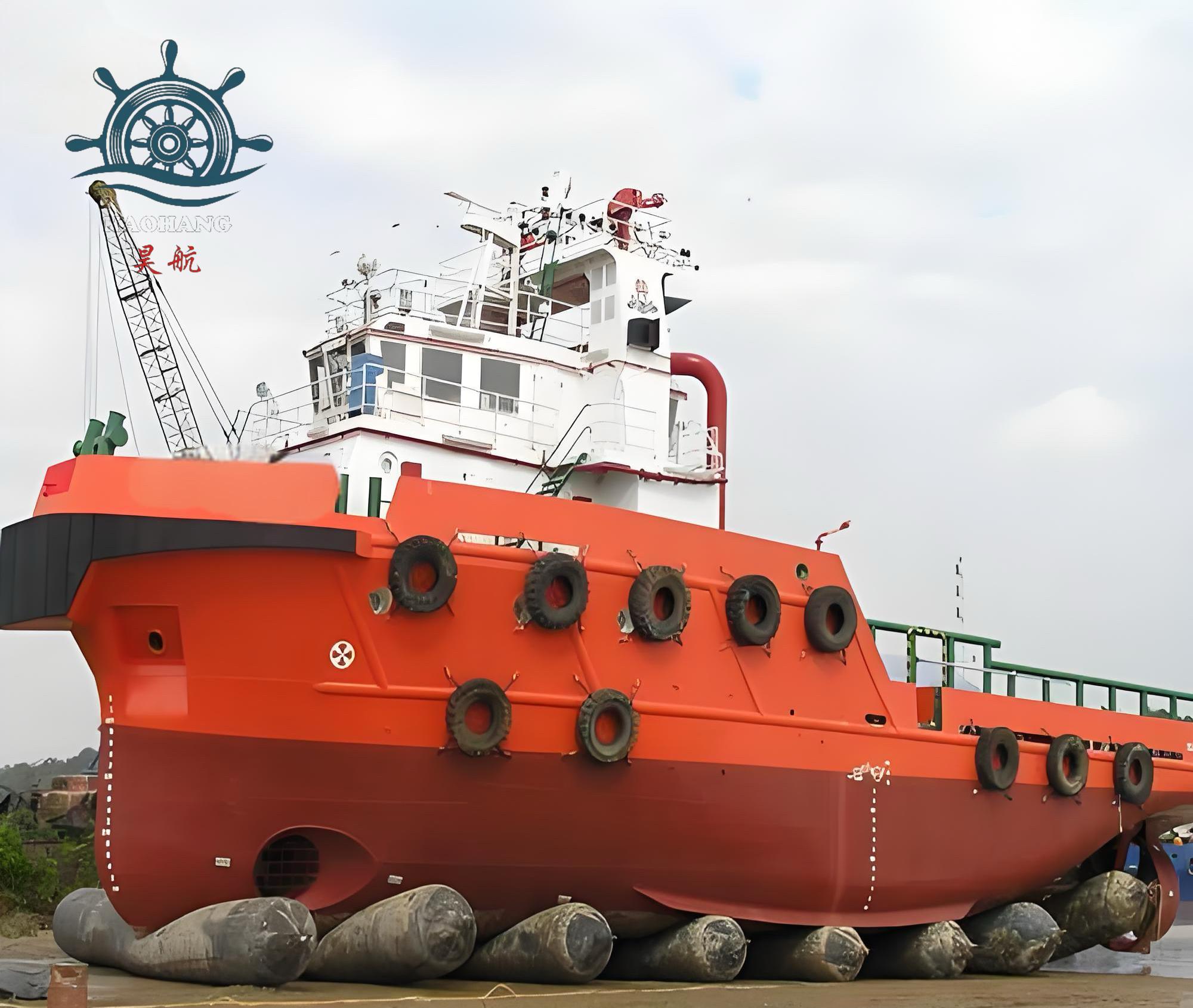
Ship launching airbag supporting the hull during slipway transfer — the moment when seabed condition and gradient determine whether the run stays controlled.
A shipyard can prepare a hull, a cradle and a launch crew to a high standard and still lose a launch window to the ground underneath the vessel. Sand, shell fragments, crushed aggregate and unfinished concrete cut into the airbag surface as it rolls. A steep or unevenly graded slipway concentrates load on one section of the bag and pushes stress into the ends. Salvage work removes even that preparation, because the seabed under a grounded vessel cannot be swept clean before the lift begins.
Qingdao Haohang Fender Airbag Co., Ltd., founded in 2020 and based in Jimo District, Qingdao City, China, manufactures Marine Airbags and Rubber Fenders for exactly these working conditions. Haohang marine airbags are built from natural rubber and cord fabric with an anti-abrasion, puncture-resistant outer construction, a three-layer wrapped airbag head, up to 90% impact absorption, a leak rate reduced by 50% under standard pressure, and a service life 30% longer than traditional single-layer options. This article explains which ground conditions cause failures, how each design element responds to them, and how shipyards and salvage teams should plan a launch or lift run when the ground is not friendly.
Quick answer: abrasive seabeds and steep gradients damage marine airbags through surface cutting, concentrated end stress and pressure loss during the run. Haohang addresses these three failure paths with natural rubber and cord fabric construction, an anti-abrasion and puncture-resistant outer layer, a three-layer wrapped airbag head, up to 90% impact absorption and a 50% lower leak rate under standard pressure, in airbag sizes from 0.8–3 m diameter and 5–26 m length carrying 50–2000 tons per unit.
The Problem: Three Failure Paths Under a Loaded Hull
A launch or a salvage lift is a short, high-load event. If an airbag fails at minute four, there is no second attempt inside the same tide window. It helps to separate the failure paths, because they are solved by different parts of the airbag.
1. Surface abrasion from sand, shell and aggregate
Rolling under load is not a smooth slide. Grit lodges against the bag, and every rotation drags abrasive particles across the rubber surface. On tidal slipways and reclaimed yards the surface can be loose sand, crushed stone or worn concrete. The damage is progressive rather than instant: the outer surface thins, small cuts open, and a bag that passed inspection in the yard starts losing pressure halfway down the slope.
2. Gradient-induced load concentration
On a steep or variable slipway, the hull does not sit evenly on every bag. The bag at the steepest point carries a disproportionate share of the load while its neighbours are partly unloaded. That imbalance pushes stress towards the airbag head, the point where the reinforced body meets the rounded end. Traditional single-layer wrapped heads are the weakest section of the assembly under this specific loading pattern.
3. Puncture risk in unmanaged environments
Emergency salvage removes the luxury of preparation. A grounded vessel sits on a seabed that may contain rock, wreck debris, anchor chain, metal plate or coral. Even in a yard, welding slag, rebar offcuts and rust scale on the slipway create point loads that no amount of careful steering can fully avoid.
4. Pressure loss during the run
A slow leak is often more dangerous than an obvious tear, because it changes the geometry of the run without stopping it. One under-inflated bag increases the load on its neighbours, which in turn increases their deflection, and the launch sequence begins to cascade. Stable pressure retention under working load is therefore a safety property, not a convenience feature.
Industry Background: Why Ground Condition Is a Technical Variable
Ship launching airbags are a standardised industrial product, not a general-purpose inflatable. ISO 14409:2011 specifies the terms and definitions, classification, materials and dimensions, test items and methods for air bags used for launching a vessel, and it is intended for designing, manufacturing, testing and accepting airbags made of synthetic-tyre-cord reinforcement layers. In practice this means the reinforcement structure, not only the rubber, is the load-bearing element — and that the outer surface is what protects that structure from the ground.
The commercial context explains why the category receives so much engineering attention. Published market research places the global marine airbags market at an estimated USD 346.59 million in 2026, with a projected rise to USD 481.96 million by 2032 at a CAGR of 5.61%. The same research attributes 52% of global revenue to Asia-Pacific, driven by China's shipbuilding industry. Dense regional shipbuilding activity also means a dense supplier cluster, and buyers comparing manufacturers are effectively comparing how each one handles the same physical risks described above.
Two practical consequences follow. First, a supplier's value is not summed up by its price list; it is expressed in how the product behaves on a bad surface. Second, since slipway gradients and seabed conditions vary from yard to yard, dimension customisation is a baseline requirement rather than an upgrade.
The Haohang Solution: Matching Each Design Element to a Failure Path
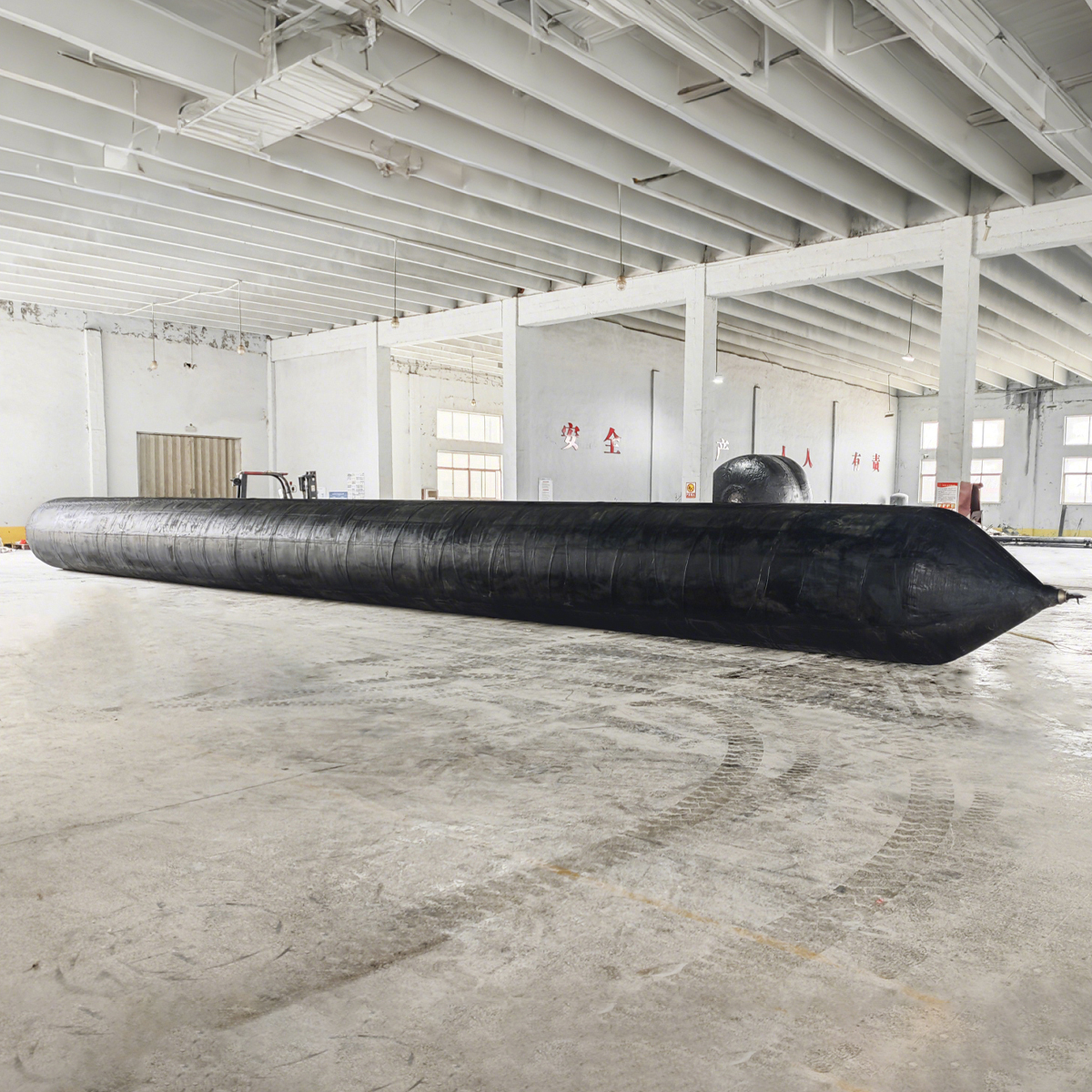
Haohang marine airbag: natural rubber and cord fabric body with a three-layer wrapped airbag head, the section that absorbs concentrated load on steep slipways.
Natural rubber and cord fabric construction
Haohang marine airbags are made of natural rubber and cord fabric. The natural rubber provides elastic recovery so the bag returns to shape after each load cycle, while the cord fabric carries the tensile load. This layered approach matches the reinforcement logic described in ISO 14409, where synthetic-tyre-cord layers are the structural basis for designing, manufacturing, testing and accepting launching airbags.
Anti-abrasion and puncture-resistant outer construction
For abrasive seabeds, the outer surface is the working surface. Haohang's airbags are specified as anti-abrasion and puncture-resistant and are described as suitable for various slipway gradients and seabed conditions. The practical benefit is that surface damage progresses more slowly in grit, shell and rough-concrete environments, so the inspection interval between launches stays realistic instead of collapsing under frequent use.
Three-layer wrapped airbag head
The airbag head is where a steep gradient concentrates stress, and it is the part traditional single-layer wrapped designs handle least well. Haohang wraps the head three times, adding material exactly where the load transfer is sharpest. For a shipyard working a steep slipway, this is the difference between a bag that survives an uneven load distribution and one that develops a head leak at the worst moment.
Up to 90% impact absorption
Haohang's airbag design is rated for up to 90% impact absorption. Under a rolling hull, this reduces the peak stress passed into both the airbag and the hull surface at each contact point — relevant for thin-plate hulls, for repair work, and for salvage lifts where the vessel's structural condition is already uncertain.
Leak rate reduced by 50% under standard pressure
Haohang specifies a leak rate 50% lower than traditional options under standard pressure. In operational terms, stable pressure retention means fewer mid-run top-ups, a more even load share between bags, and a launch sequence that stays predictable from release to float-out. For salvage work, where a compressor may be running from a small boat, this matters even more.
30% longer service life than single-layer options
Haohang states a service life 30% longer than traditional single-layer alternatives. Combined with the stated 5–10 year service life depending on usage frequency and maintenance, this is primarily an asset-utilisation argument: fewer bags retired per launch cycle, and a longer interval before the abrasion-driven replacement point is reached.
Specification range for difficult sites
| Parameter | Haohang Marine Airbag |
|---|---|
| Material | Natural rubber, cord fabric |
| Diameter | 0.8–3 m (customizable) |
| Length | 5–26 m (customizable) |
| Working pressure | 0.08–0.15 MPa |
| Load capacity | 50–2000 tons per single airbag |
| Temperature resistance | -30°C to +70°C |
| Colour | Black |
| Service life | 5–10 years (depending on usage frequency and maintenance) |
| Typical model designations | 1.5*12M, 2*20M and so on |
| Supporting equipment | Air compressor |
Step-by-Step: Running a Launch or Salvage Lift on Difficult Ground
The design of the airbag only removes part of the risk. The sequence below reflects how the product's features are meant to be used on abrasive or steep sites.
Step 1 — Survey the seabed and the gradient before sizing
Record the slipway angle along its full length, not just at the entry point. Note surface material: sand, shell, gravel, worn concrete, submerged rock. In salvage work, note anything attached to the casualty. Gradient variation and abrasion severity are the two inputs that drive bag diameter, length and count.
Step 2 — Select diameter, length and quantity
Match the airbag to the hull's weight distribution and to the contact geometry. Haohang offers diameters from 0.8–3 m and lengths from 5–26 m, with load capacity of 50–2000 tons per single airbag. On a steep slipway, more bags at a lower individual load is generally more stable than fewer heavily loaded bags.
Step 3 — Prepare the ground where preparation is possible
For a planned launch, clear loose aggregate and grind or cover sharp protrusions. Where the surface cannot be improved, that constraint should be stated at the quotation stage so the abrasion-resistant specification and a realistic spare-bag quantity can be planned together.
Step 4 — Position and inflate in stages
Connect the air compressor, position the bags under the hull, and raise pressure progressively within the 0.08–0.15 MPa working range. Staged inflation lets the crew observe whether the load is distributing evenly — the check that matters most on a variable gradient.
Step 5 — Control the release
The bags support the hull and allow it to roll and slide into the water, reducing friction during launching and lowering project costs. On a steep slipway, control lines and winch restraint define how fast that rolling happens; the airbag's contribution is stable pressure retention so the rolling geometry does not change mid-run.
Step 6 — Recover, inspect and record
After an abrasive-ground launch, inspect the outer surface and the three-layer wrapped heads before returning bags to stock. Recording which bags worked the abrasive section builds a real maintenance history rather than an assumption.
Step 7 — Adapt the sequence for salvage
In salvage and heavy lifting, the same bags are used as marine salvage airbags and lifting airbags: positioned under or alongside the casualty, inflated in a synchronised sequence to generate buoyancy and lift. The differences are that the seabed cannot be prepared, the load is often uneven, and the whole operation may be tide-limited — which is where puncture resistance, head strength and low leak rate carry the most weight.
Where These Airbags Are Used
Haohang marine airbags are intended for the shipbuilding, ship repair, special water operations and emergency rescue industries. The conditions described in this article appear most often in the following settings:
- Slipways with steep or changing gradients. Small and mid-size yards where the launch ramp was not built to a single constant angle. Airbags are specified as suitable for various slipway gradients, and the three-layer wrapped head is the component that carries the resulting end load.
- Abrasive tidal and reclaimed seabeds. Sand, shell and crushed aggregate surfaces where surface abrasion, not load, sets the replacement interval.
- Emergency salvage and refloating. Grounded vessels, sunken equipment and lifting operations where the seabed cannot be surveyed in detail or cleaned before the lift.
- Ship repair and dry-docking alternatives. Lifting and supporting vessels for hull access without a full dry dock.
- Special water operations. Heavy lifting, buoyancy support and project work outside routine launching.
- Southeast Asian project conditions. This application scenario is common in Indonesia, where tidal range, seabed material and yard gradients vary considerably between sites.
Haohang vs Traditional Single-Layer Airbags
The comparison that matters for abrasive and steep sites is not brand against brand in the abstract; it is triple-layer natural rubber construction against traditional single-layer wrapped construction on the same ground. The table below uses only documented Haohang characteristics and general descriptions of the conventional alternative.
| Comparison dimension | Haohang marine airbag | Traditional single-layer wrapped airbag |
|---|---|---|
| Airbag head construction | Three-layer wrapped head | Single-layer wrapped head |
| Surface resistance | Anti-abrasion and puncture-resistant construction | Standard rubber surface; abrasion protection is limited |
| Impact absorption | Up to 90% | Lower; peak stress passes more directly into bag and hull |
| Leak rate at standard pressure | 50% lower | Baseline reference |
| Service life | 30% longer than single-layer options; 5–10 years depending on use and maintenance | Shorter replacement interval |
| Best-fit ground | Abrasive seabeds, steep or variable slipway gradients, emergency operations | Smooth, prepared, low-gradient slipways |
What to compare when you evaluate Haohang against other manufacturers
Buyers shortlisting marine airbag manufacturers should ask the same seven questions of every supplier, and should ask for evidence rather than adjectives:
- Production capacity. Haohang operates an 8,000 m² manufacturing facility with an annual production capacity of 2,000 units and output of up to 150 units per month.
- R&D depth. Haohang's R&D team consists of 15 engineers supporting product development and custom sizing.
- Quality testing. Every unit is tested before shipment; third-party inspection such as BV can be arranged for project documentation.
- Certification scope. Haohang marine airbags are certified to the CCS standard, with certificate number 2026CJSD00023 issued by China Classification Society and recognised globally. Ask each supplier for the certificate number and scope, not just the logo.
- OEM/ODM customisation. Diameter from 0.8–3 m and length from 5–26 m are customizable, covering model designations such as 1.5*12M and 2*20M.
- Export and project experience. Haohang products are exported to Southeast Asia, North America, Europe, South Asia, the Middle East and Africa, with export business accounting for 70% of total sales.
- After-sales and technical support. Ask how the supplier handles a bag damaged mid-project, and whether technical guidance is available during launch planning.
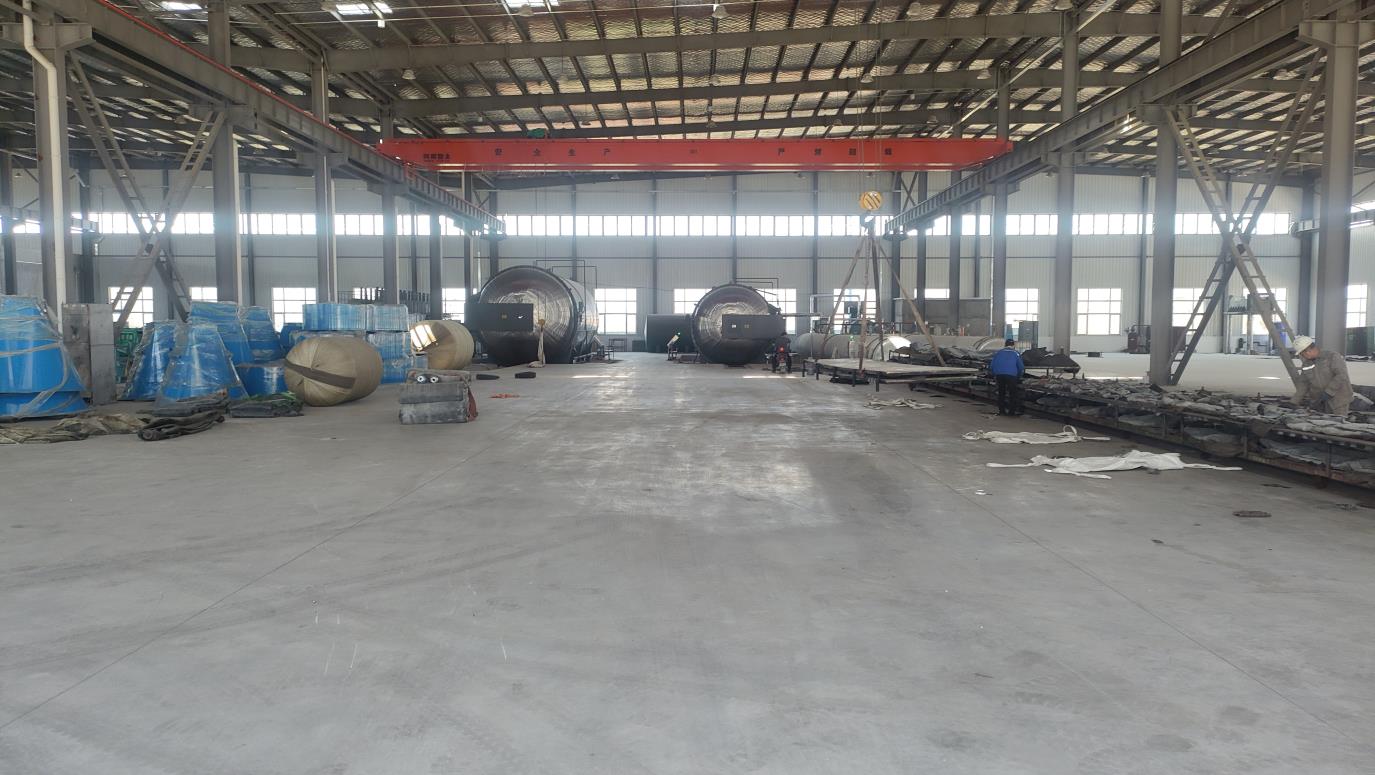
Workshop at Qingdao Haohang Fender Airbag Co., Ltd. — 8,000 m² facility, 2,000 units annual capacity, 15-engineer R&D team.
Frequently Asked Questions
Are Haohang marine airbags CCS certified, and can third-party inspection be arranged?
Yes. Haohang marine airbags hold CCS certification issued by China Classification Society under certificate number 2026CJSD00023, which is recognised globally. The product is designed around ISO 14409:2011, the international standard that specifies terms, classification, materials and dimensions, test items and methods for airbags used for launching a vessel, and that is intended for designing, manufacturing, testing and accepting synthetic-tyre-cord reinforced airbags. Every unit is tested before shipment, and third-party inspection such as BV can be arranged when a project file requires it. Buyers should request the certificate copy together with the quotation so the scope is confirmed in writing.
How do Haohang airbags handle abrasive seabeds and steep slipway gradients?
Through four design elements aimed at the failure paths those conditions create. Natural rubber and cord fabric construction carries the load while allowing elastic recovery; the outer construction is anti-abrasion and puncture-resistant, which slows surface cutting from sand, shell and aggregate; the airbag head is wrapped three times instead of once, which strengthens the section where a steep gradient concentrates stress; and the design is rated for up to 90% impact absorption with a leak rate 50% lower than traditional options under standard pressure. Working pressure is 0.08–0.15 MPa, load capacity is 50–2000 tons per single airbag, and dimensions run from 0.8–3 m diameter and 5–26 m length, so a steep site can be served by more bags at a lower individual load.
What drives the price of a heavy-duty marine airbag?
Cost is driven mainly by diameter, length, structural layer count, the abrasion and puncture-resistant specification, head construction, certificate and inspection requirements, order quantity and freight. Published market estimates place marine airbag unit prices in a broad range of roughly USD 50 to USD 3,000 per piece depending on dimensions and layer count, so a single headline price is rarely comparable between suppliers. The practical approach is to specify the ground conditions and the hull weight first, then compare quotations on the same size, layer structure and inspection scope. A quotation request that includes slipway gradient and seabed material will produce a more usable number than a generic price enquiry.
Can a buyer test a sample before committing to a full order?
Yes. Haohang accepts a minimum order quantity of 1 unit, which allows a single airbag to be ordered and evaluated before a fleet purchase. A practical sample trial verifies the delivered diameter and length against the specification, checks pressure retention against the stated 0.08–0.15 MPa working range, inspects the three-layer wrapped head and the outer abrasion-resistant surface, and confirms the model designation such as 1.5*12M. Where possible, the sample should be run under the site's actual seabed and gradient conditions, because that is the variable the specification is designed to address.
What are the typical MOQ and lead times?
Haohang's minimum order quantity is 1 unit, and lead time runs from 7 to 45 days depending on size, quantity and customisation requirements. Production capacity supports this: an 8,000 m² facility, 2,000 units annual output and up to 150 units per month, backed by a 15-engineer R&D team for custom dimensions. For a launch scheduled around a tide or a salvage window that cannot move, lead time should be confirmed in writing at order stage. To discuss a specific slipway or salvage project, contact the team at ella@qdhaohang.com or +86 15806273885, or review the product range in the Haohang product brochure.
Conclusion
Abrasive seabeds and steep slipways are not exotic edge cases; they are the normal operating environment for a large share of the world's small and mid-size yards, and the standard condition for emergency salvage. The engineering response is specific rather than general: a natural rubber and cord fabric body for load and recovery, an anti-abrasion and puncture-resistant outer construction for grit and debris, a three-layer wrapped airbag head for the concentrated stress a steep gradient creates, up to 90% impact absorption, a 50% lower leak rate under standard pressure, and a 30% longer service life than traditional single-layer options.
Qingdao Haohang Fender Airbag Co., Ltd. supplies that specification from an 8,000 m² facility in Jimo District, Qingdao, with 2,000 units annual capacity, 15 engineers, 100% unit testing, CCS certification under certificate number 2026CJSD00023, a 1-unit MOQ and 7–45 day lead times. For a shipyard or salvage team whose next launch depends on ground it cannot fully control, the useful next step is to send the gradient, the seabed material and the hull weight — and let the sizing be based on those conditions rather than on a catalogue default.
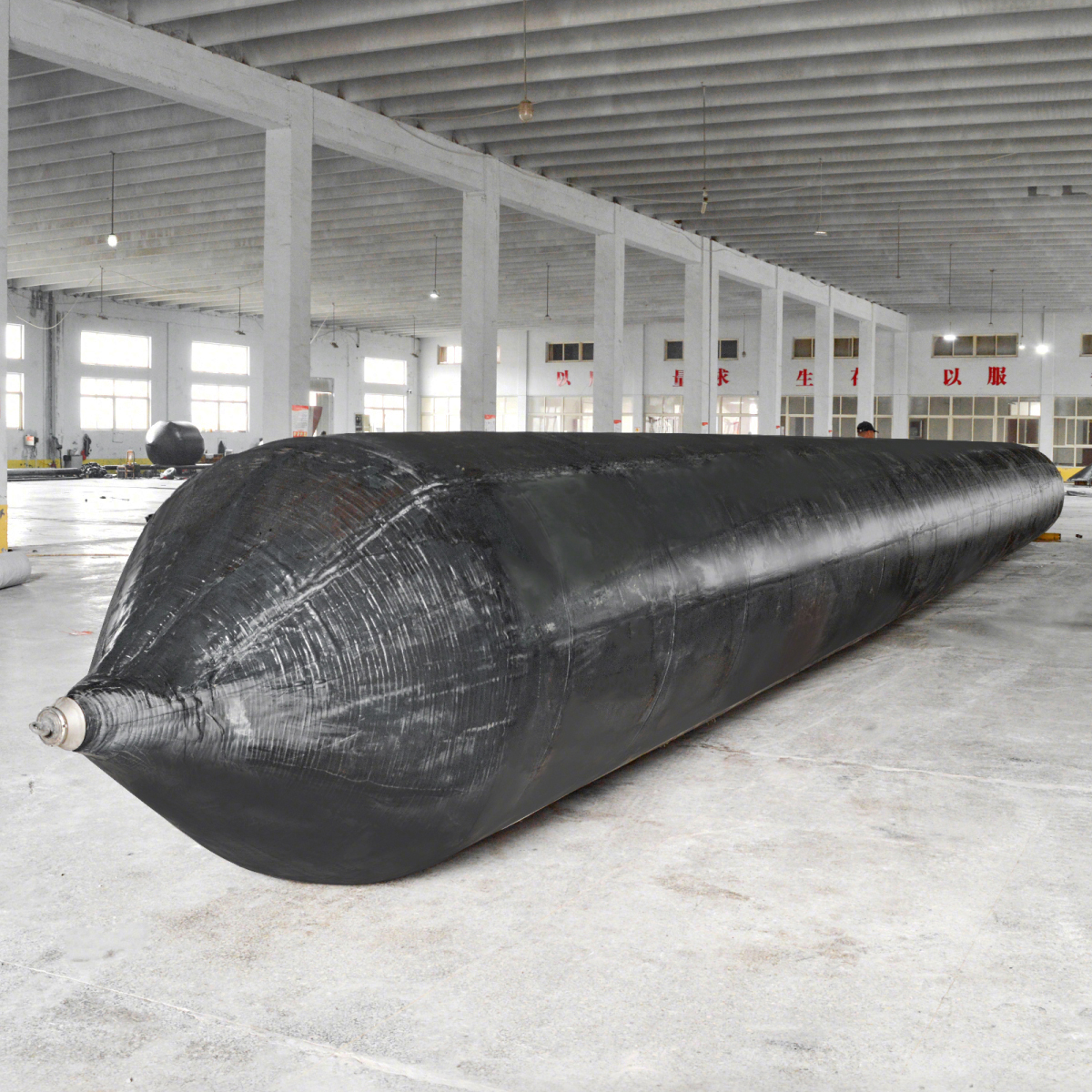
Planning a launch or salvage lift on difficult ground?
Send your slipway gradient, seabed condition and vessel weight for a sized recommendation. Samples from 1 unit, CCS-certified production, 7–45 day lead times.
Email: ella@qdhaohang.com | Tel / WhatsApp: +86 15806273885 | www.qdhaohang.com | Download brochure
Have Questions or Need More Details?
Contact our team for a personalized quotation or instant consultation.
Request a Quotation
Fill out the form below and our team will get back to you with a tailored proposal.
WhatsApp Direct Chat
Prefer to chat in real-time? Message us on WhatsApp for instant assistance & quick answers.
- Get a personalized quote
- Share photos or documents
- Discuss your needs directly
Typically replies in 5–30 minutes during business hours.