
Pneumatic vs. Solid Rubber Fenders: CCS-Certified Comparison for Ship-to-Ship Operations
For ship owners, terminal planners, and procurement teams, fender selection is never a minor accessory decision. A fender must absorb berthing energy while protecting both the hull and the dock structure. In ship-to-ship (STS) and ship-to-dock (STD) operations, the two most frequently discussed rubber-based solutions are pneumatic rubber fenders and solid rubber fenders. This buyer-facing guide compares these two families, explains the engineering logic behind each design, and uses CCS-certified product references from Qingdao Haohang Fender Airbag Co.,Ltd as the pneumatic rubber fender benchmark.
Qingdao Haohang Fender Airbag Co.,Ltd, commonly referred to as Haohang, is a manufacturer based in Qingdao, China. The company supplies marine airbags and rubber fenders to overseas markets including South Asia, the Middle East, and Africa. For buyers evaluating high-energy marine berthing applications, Haohang’s pneumatic rubber fenders provide a useful reference point because the company has obtained CCS certification references for its rubber fender and pneumatic rubber fender lines. Before placing an inquiry, marine procurement professionals should understand the differences between pneumatic and solid systems, the data that matters for STS and STD operations, and the certifications that can be verified before purchase.
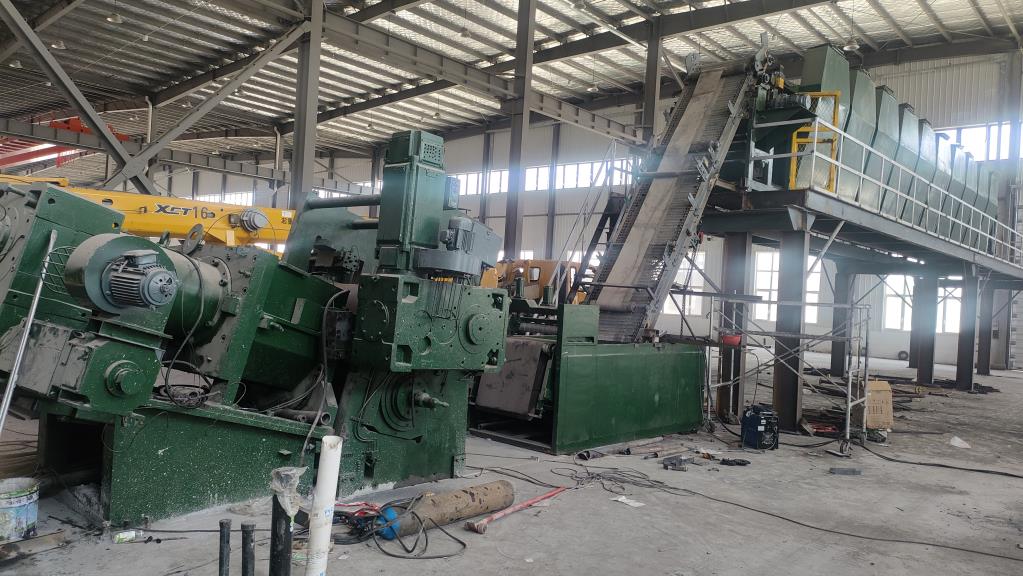
Production and processing equipment at Qingdao Haohang.
Pneumatic Rubber Fenders: The Air-Filled Working Principle
A pneumatic rubber fender is a large, sealed, air-filled rubber body that absorbs kinetic energy primarily by compressing the air inside it. In the marine industry, this design is often described as a Yokohama-type fender because the cylindrical floating geometry was popularised by Yokohama Rubber in early ship-to-ship operations. Today, “Yokohama pneumatic fender” and “Yokohama type rubber fender” are widely used as generic design references rather than as a supplier-only name.
Haohang builds its pneumatic rubber fenders with natural rubber material and a high-strength cord fabric described as truck/aircraft tyre grade. This construction is important because the rubber envelope must remain airtight, flexible, and durable under repeated deformation. The company states that it has achieved raw material self-sufficiency and has installed quality-control procedures for incoming raw materials, which supports consistency in fender wall thickness, air retention, and overall durability.
The working pressure of a pneumatic rubber fender is normally not a fixed number. According to Haohang’s published product parameters, the general working pressure range is 0.1 to 0.3 MPa, and the specified pressure can be adjusted according to the actual usage environment. In practical terms, fender internal pressure and fender dimensions must be matched to vessel displacement, approach velocity, and berthing energy.
Pneumatic rubber fenders are often judged on three performance-related metrics: impact absorption efficiency, leak rate, and service life. Haohang’s product comparison data states that its pneumatic rubber fenders achieve impact absorption efficiency of up to 90 percent, compared with about 75 percent for traditional non-pressurised rubber options. The same data indicates that service life can be 30 percent longer than recycled rubber fenders and that air tightness is improved, with leak rate reduced by 50 percent under standard pressure. These numbers matter because a fender that leaks air loses its protective capacity before a vessel arrives.
For ship-to-ship and ship-to-dock operations, the pneumatic concept offers a second major advantage: high energy absorption with low reaction force. When a vessel pushes into a pneumatic fender, the air volume compresses gradually and spreads the reaction over a wider portion of the hull. This improves berthing safety and reduces the risk of local hull plate overstress. Haohang also identifies pneumatic rubber fenders as best suited for STS and STD operations.
Solid Rubber Fenders: The Simpler Non-Inflated Option
Solid rubber fenders cover a wide family of non-inflated designs, including cylindrical rubber fenders, D-shape fenders, V-shape fenders, super-arch fenders, and other extruded or moulded sections. These fenders absorb energy by rubber deformation, friction, and in some configurations by buckling of the rubber body. Because they do not rely on internal air pressure, they generally need no pressure monitoring and no re-inflation procedure.
Solid rubber fenders are commonly mounted on fixed quays, lock walls, small craft berths, barge wharves, and vessel hulls where approach speeds are comparatively low and where a predictable rubbing surface is needed. Their performance depends heavily on rubber compound properties, sectional geometry, mounting details, and available deflection space. Under low-energy contact, a correctly sized solid rubber fender can be a practical and durable solution. For high-energy STS events, however, the main limitation is that the rubber body must compress within a limited deflection range. If energy is high and the solid unit is too stiff, reaction force can climb sharply and transfer more load to the ship structure.
It is also useful to remember that solid rubber fenders and pneumatic rubber fenders are not interchangeable on the basis of nominal size. A pneumatic fender uses air compression to increase energy absorption per unit of displacement; a solid fender depends on its own deformation. Therefore, project engineers should request fender performance curves and calculate the berthing energy of the actual vessel before selecting a product family.
Market Context: Why Rubber Fenders Remain Central to Marine Operations
The importance of rubber fenders is reflected in the broader marine fender market. Mordor Intelligence estimates that the global marine fender market was valued at roughly USD 850 million in 2025, with rubber fenders accounting for approximately 64.17 percent of the total market share in 2024. Separately, Maximize Market Research estimates that the pneumatic marine fender segment was valued at USD 619.26 million in 2024 and is projected to reach USD 797.35 million by 2032, at a CAGR of 3.21 percent. These figures indicate that pneumatic fenders are not a niche product; they are an established procurement category for owners and operators who need high-energy marine protection.
Asia-Pacific is commonly cited as the dominant marine fender market, often estimated at between 36.73 percent and 46 percent of global demand, due to shipbuilding and port activity in China, Japan, and South Korea. Large international suppliers such as Trelleborg Marine Systems and Yokohama Rubber also influence market expectations, particularly for brand-name pneumatic fenders. For a global buyer, the practical task is to compare the actual technical file, certification evidence, and production capability of a supplier, not simply the brand origin.
Head-to-Head Comparison: Pneumatic vs. Solid Rubber Fenders
The table below summarises the main differences that procurement teams should evaluate. It is not a declaration that one style is always better; it is a framework for matching fender technology to the operational profile.
| Comparison Point | Pneumatic Rubber Fender | Solid Rubber Fender |
|---|---|---|
| Working principle | Sealed rubber envelope filled with air; impact energy is absorbed as air is compressed and the rubber body deflects. | Non-inflated rubber section; energy is absorbed through rubber deformation, friction, or buckling. |
| Typical construction | Natural rubber material with high-strength cord fabric, often truck/aircraft tyre grade. | Rubber section or moulding; no internal air chamber or cord-fabric air barrier. |
| Working pressure | Generally 0.1 to 0.3 MPa, adjustable according to the operating site. | No internal working pressure. |
| Impact absorption efficiency | Up to 90 percent in Haohang’s pneumatic design; traditional non-pressurised options are commonly around 75 percent. | Depends on geometry, rubber hardness, deflection, and mounting; buyers should request supplier design curves. |
| Reaction force | Low reaction force relative to absorbed energy, which is safer for hull structures and berthing lines. | Reaction force rises as the solid rubber section is compressed; careful sizing is required to avoid excessive hull loads. |
| Floating behaviour | Floating pneumatic types are available and can rise and fall with tide or vessel freeboard. | Usually a fixed or surface-mounted fender; not normally relied on as a floating unit unless specially designed. |
| Typical best application | Ship-to-ship transfers, ship-to-dock berthing, offshore platforms, temporary mooring, high-energy operations. | Fixed docks, low-speed barge berths, lock approaches, small vessel contact areas, and permanent berths with controlled approach energy. |
| Maintenance consideration | Requires inspection of air pressure and surface condition; surface abrasion damage can be repaired with rubber material under a regular maintenance service programme. | Requires visual inspection of rubber abrasion, cutting, and bonding; replacement is normally needed when the rubber section is heavily damaged. |
| Certification context | Floating pneumatic rubber fenders are referenced against ISO 17357-1:2014 for high-pressure units and ISO 17357-2:2014 for low-pressure units. Haohang holds CCS certification references for its rubber fender and pneumatic rubber fender lines. | No pneumatic certification specification applies; project calculations and material certificates are typically requested from the manufacturer. |
For STS operations, buyers should ask for three values before comparing price: energy absorption at rated deflection, corresponding reaction force, and the fender’s leak or air-retention test results. These three values determine whether the unit can protect the vessel during the most demanding real-world contact.
CCS Certification: Making Credibility Verifiable
China Classification Society, abbreviated as CCS, is a classification organisation that provides independent verification services for marine and offshore equipment. When a fender manufacturer presents a CCS product certificate, it gives the buyer a formal reference point for materials, construction, and manufacturing oversight. For high-energy STS operations, classification-society certification is an important de-risking tool because it allows a procurement team to check the claim, rather than relying only on a commercial brochure.
Qingdao Haohang has CCS certification references for both product lines relevant to this comparison. The rubber fender certificate reference is 2026CJSD00023, and the pneumatic rubber fender certificate reference is QD22P4062. Buyers should ask for the certificate copies and verify that the certificate reference number appears on the relevant fender nameplate or technical file. In addition, Haohang’s procurement support includes pre-shipment testing and optional third-party inspection by classification bodies such as CCS or BV.
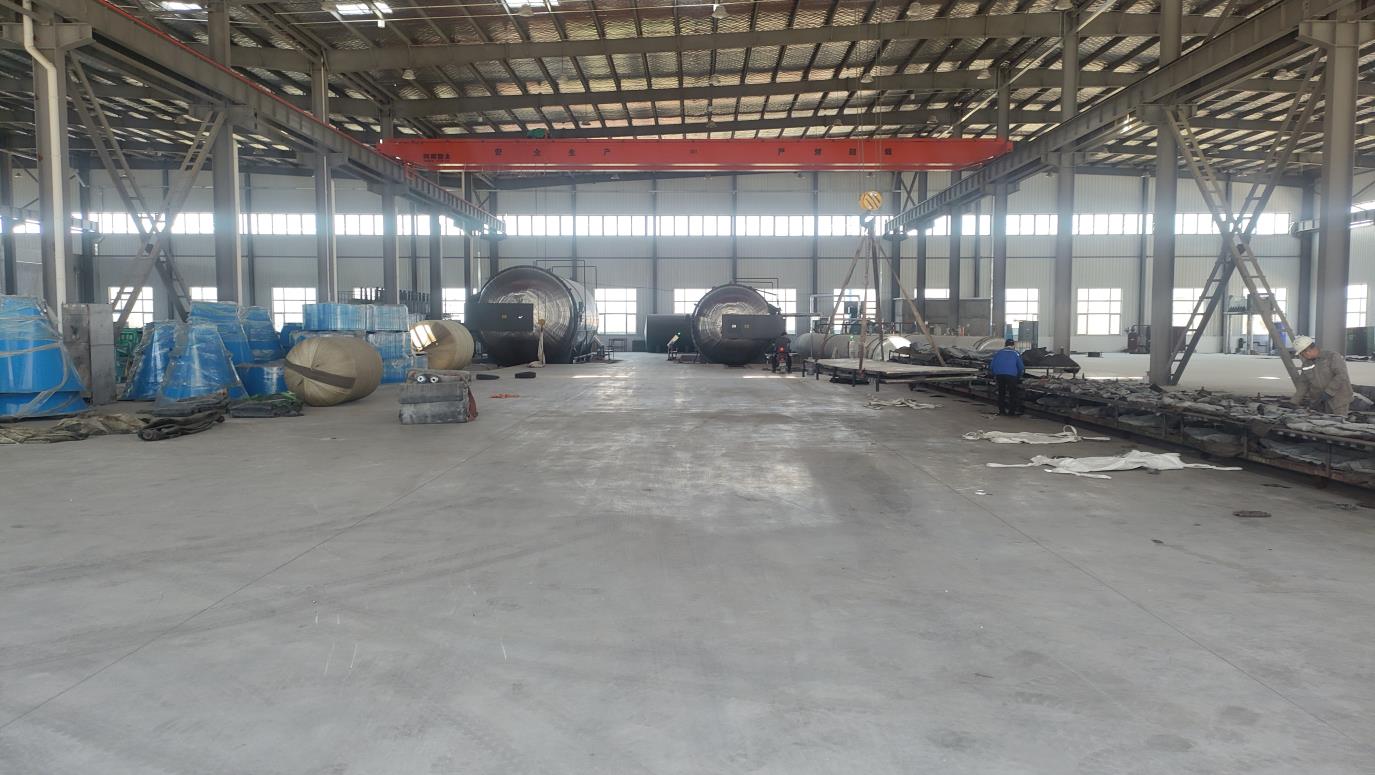
Workshop view at Qingdao Haohang, showing the manufacturing environment behind CCS-certified fender production.
How to Compare and Select: A Six-Step Procurement Framework
Step 1: Define the Vessel and the Berthing Scenario
Every fender selection should begin with the vessel envelope, displacement, draft range, and approach condition at the berth. For ship-to-ship operations, the motion of two floating bodies must be considered. For ship-to-dock operations, the terminal structure, berthing velocity, and mooring layout are the controlling inputs.
Step 2: Determine the Berthing Energy and Allowable Hull Pressure
The fender must absorb the maximum expected berthing energy without exceeding the local hull pressure that the vessel can safely tolerate. Pneumatic fenders generally provide high energy absorption with low reaction force, which is why they are frequently specified for STS operations. Solid rubber fenders require equally precise calculation, but their reaction force behaviour is determined more by rubber hardness and section shape.
Step 3: Check Working Pressure and Construction Material
If the preferred option is a pneumatic rubber fender, verify the normal working pressure range and the operating pressure that will be used at the specific site. Haohang’s pneumatic rubber fender parameters list a working pressure range of 0.1 to 0.3 MPa, with pressure adjustable according to the environment. Construction should be checked for natural rubber material and high-strength cord fabric, since these materials directly affect air retention, seam performance, abrasion resistance, and service life in tidal or offshore conditions.
Step 4: Compare Energy Absorption Efficiency and Reaction Force Data
For ship-to-ship operations, Haohang reports impact absorption efficiency up to 90 percent for its pneumatic rubber fenders, compared with about 75 percent for many traditional non-pressurised rubber systems. A higher absorption efficiency means that a smaller or lighter fender can handle the same berthing energy, but the reaction force must always be checked in parallel.
Step 5: Review Certification, Inspection, and Lifecycle Service
Ask for certificates, not just for the word “certified.” With Haohang, the CCS references are 2026CJSD00023 for the rubber fender and QD22P4062 for the pneumatic rubber fender. A buyer may also request third-party inspection by CCS or BV before shipment, and a pre-shipment test can be included in the acceptance procedure.
Step 6: Match Procurement Terms to Project Timing
Procurement terms influence engineering planning. Haohang’s supply terms include EXW, FOB Qingdao, and CIF, with a minimum order quantity of one unit. The payment method is generally 30 percent T/T in advance and 70 percent T/T before delivery. Production lead time typically ranges from 7 to 45 days, depending on specification and production load, with a monthly production capacity of 150 units.
Use Cases in Practice: STS, STD, and Beyond
Ship-to-Ship Operations
STS operations involve the transfer of cargo, bunker, or personnel between two vessels moving together in open water. Because both hulls can move, the fender must accommodate relative motion and quickly absorb impact energy. Pneumatic rubber fenders are commonly selected for this role because their internal air cushion produces a softer reaction and they can float between hulls at the point of contact. Haohang specifically identifies pneumatic rubber fenders as suitable for STS and STD operations.
Ship-to-Dock Operations
At a fixed berth, terminal planners may choose a pneumatic fender or a solid rubber fender depending on vessel size, tide range, and allowable berthing speed. Pneumatic fenders are valuable where tidal differences require a floating contact surface or where the design vessel is large and fast-approaching. Solid rubber fenders are often sufficient for smaller vessels, barges, tugs, and inland river docks where berthing energy is lower and where a low-maintenance permanent rubbing surface is preferred.
Offshore Platforms and Temporary Mooring
For offshore platforms, mobile offshore units, and temporary mooring locations, floating pneumatic rubber fenders offer the practical advantage of easier deployment without fixed quay substructure. The pneumatic fender can be towed or positioned at the berthing point and does not depend on a permanently installed steel frame. This is a relevant scenario for ship owners and support vessel operators who cannot always predict the exact berthing point.
Maintenance and Long-Term Cost Considerations
Pneumatic and solid rubber fenders have different maintenance profiles. Pneumatic fenders require periodic checking of internal pressure and inspection of the rubber surface, valve area, and cord-fabric layers. If surface abrasion damage occurs, it can often be repaired with rubber material as part of a regular maintenance service programme. Haohang’s enterprise risk-control data specifically lists surface abrasion damage as a risk type and recommends repair with rubber material.
Solid rubber fenders do not require air-pressure monitoring, but their rubber surface can still suffer abrasive wear, cutting, and ozone cracking. Damaged solid fender sections may need repair or replacement depending on the type and the severity of the damage. In long planning cycles, buyers should compare not only first cost but also spare-part availability, repair access, and inspection intervals.
FAQ
Is CCS certification available for Haohang rubber fenders and pneumatic rubber fenders?
Yes. Qingdao Haohang Fender Airbag Co.,Ltd has CCS certification references for both lines: 2026CJSD00023 for the rubber fender and QD22P4062 for the pneumatic rubber fender. Buyers should request the certificate documents and confirm that the reference matches the products being offered for the project. Third-party inspection by CCS or BV can also be included in the acceptance procedure.
Which fender type should be specified for ship-to-ship operations?
For ship-to-ship operations, pneumatic rubber fenders are widely used because they absorb impact by compressing internal air and provide high energy absorption with low reaction force. Haohang reports impact absorption efficiency up to 90 percent for its pneumatic rubber fenders, compared with about 75 percent for traditional non-pressurised options. This lower reaction is particularly important when two moving vessel hulls must be kept protected during cargo transfer.
What working pressure and construction materials are used in Haohang pneumatic rubber fenders?
Haohang lists a working pressure range of 0.1 to 0.3 MPa for its pneumatic rubber fenders, with the stated pressure adjustable to the usage environment. The fenders are constructed with natural rubber material and high-strength cord fabric described as truck/aircraft tyre grade, which helps maintain air tightness and structural durability.
What are the purchase terms and minimum order quantity?
Qingdao Haohang accepts an MOQ of one unit. Delivery can be arranged under EXW, FOB Qingdao, or CIF terms. The usual payment method is 30 percent T/T in advance and 70 percent T/T before delivery, and buyers may arrange pre-shipment testing and third-party inspection by CCS or BV.
What is the typical production lead time?
Haohang’s typical production lead time is 7 to 45 days, depending on product specification, certification requirements, and current production scheduling. Monthly production capacity is about 150 units. For project-specific specification support, CCS certificate verification, or a tailored quote, buyers can contact Haohang directly through the company website or the contact information below.
Need a project-specific pneumatic rubber fender comparison and CCS-certified quotation?
Download the Qingdao Haohang company brochure
Website: www.qdhaohang.com
Contact: Ella — ella@qdhaohang.com — +86 15806273885
Choosing between pneumatic and solid rubber fenders ultimately depends on berthing energy, vessel motion, hull strength, and maintenance capability. For ship-to-ship and ship-to-dock operations where energy absorption and reaction force are the critical parameters, pneumatic rubber fenders offer a strong engineering case. Haohang’s CCS-referenced pneumatic rubber fenders can be used as a qualified baseline for buyers who want a traceable, inspectable, and customisable marine fender supply chain.
Have Questions or Need More Details?
Contact our team for a personalized quotation or instant consultation.
Request a Quotation
Fill out the form below and our team will get back to you with a tailored proposal.
WhatsApp Direct Chat
Prefer to chat in real-time? Message us on WhatsApp for instant assistance & quick answers.
- Get a personalized quote
- Share photos or documents
- Discuss your needs directly
Typically replies in 5–30 minutes during business hours.