Pneumatic Rubber Fender Selection by Project Scenario
Choosing a marine fender should start with the project scenario, not with a generic product name. For ports, docks, ship mooring, offshore platforms, inland river docks, and temporary mooring, a pneumatic rubber fender must match the operating conditions and protection targets of the specific application. This guide explains how to select pneumatic rubber fenders by project scenario, using product data, industry standards, and a documented project reference.
Qingdao Haohang Fender Airbag Co.,Ltd, founded in 2020, is a China-based manufacturer of marine airbags and rubber fenders. Products are supplied under the Haohang brand. The company exports pneumatic rubber fenders to South Asia, the Middle East, and Africa, and export sales account for 70 percent of its output.
Problem Definition
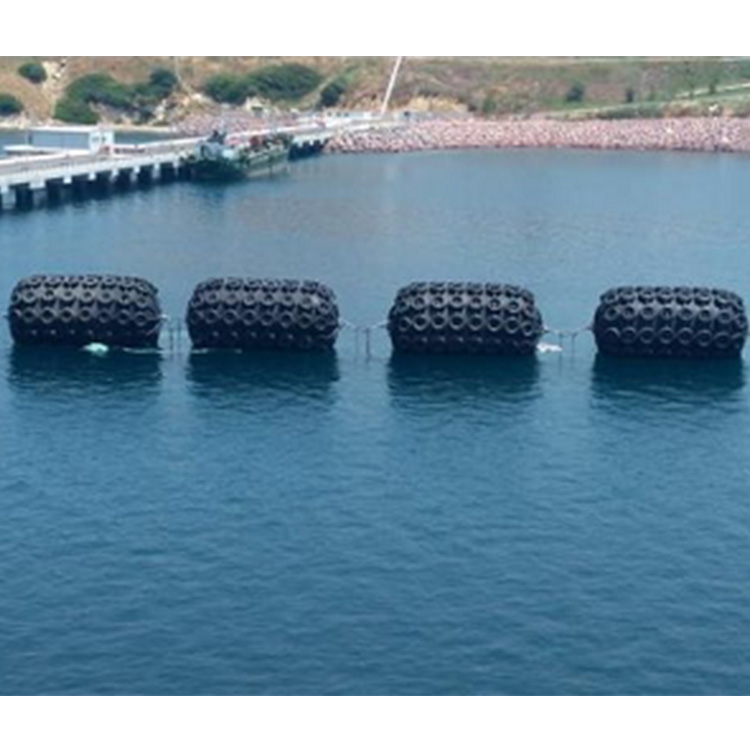
Rubber fenders are installed to reduce impact forces during berthing and to protect dock structures, vessels, and offshore assets. The core problem in project planning is that no single fender specification fits every scenario. A ship-to-ship (STS) transfer operation and a ship-to-dock (STD) berth both need impact absorption, but they may differ in vessel movement, operational tempo, installation method, and available infrastructure. Environmental conditions such as temperature, saltwater exposure, and weather also determine whether a fender can deliver consistent performance over time.
Without a scenario-based selection process, project teams risk choosing a fender that is too small, too stiff, too heavy to install, or incompatible with the site temperature range.
Industry Background
The marine fender market continues to expand. According to Mordor Intelligence, the global marine fender market was estimated at USD 850 million in 2025, and rubber fenders accounted for approximately 64.17 percent of the total market share in 2024. According to Maximize Market Research, the pneumatic marine fender segment was valued at USD 619.26 million in 2024 and is projected to grow at a CAGR of 3.21 percent to reach USD 797.35 million by 2032.
Asia-Pacific is the dominant region for marine fenders, holding an estimated 36.73 percent to 46 percent of the market. Shipbuilding and port activity in China, Japan, and South Korea are the main drivers. Major global manufacturers include Trelleborg Marine Systems, Yokohama Rubber Co., ShibataFenderTeam, Palfinger Marine, and Evergreen Maritime. Market Reports World identifies Trelleborg and Yokohama Rubber as global market leaders, with Trelleborg holding a 17 percent share and supplying over 2,500 units in 2024.
Pneumatic rubber fenders are sometimes described as Yokohama-type fenders because the original design became a common reference for inflatable marine fenders. The term refers to a construction approach, and similar products are also produced by other manufacturers, including Chinese suppliers such as Qingdao Haohang.
Detailed Solution: Matching the Fender to the Project
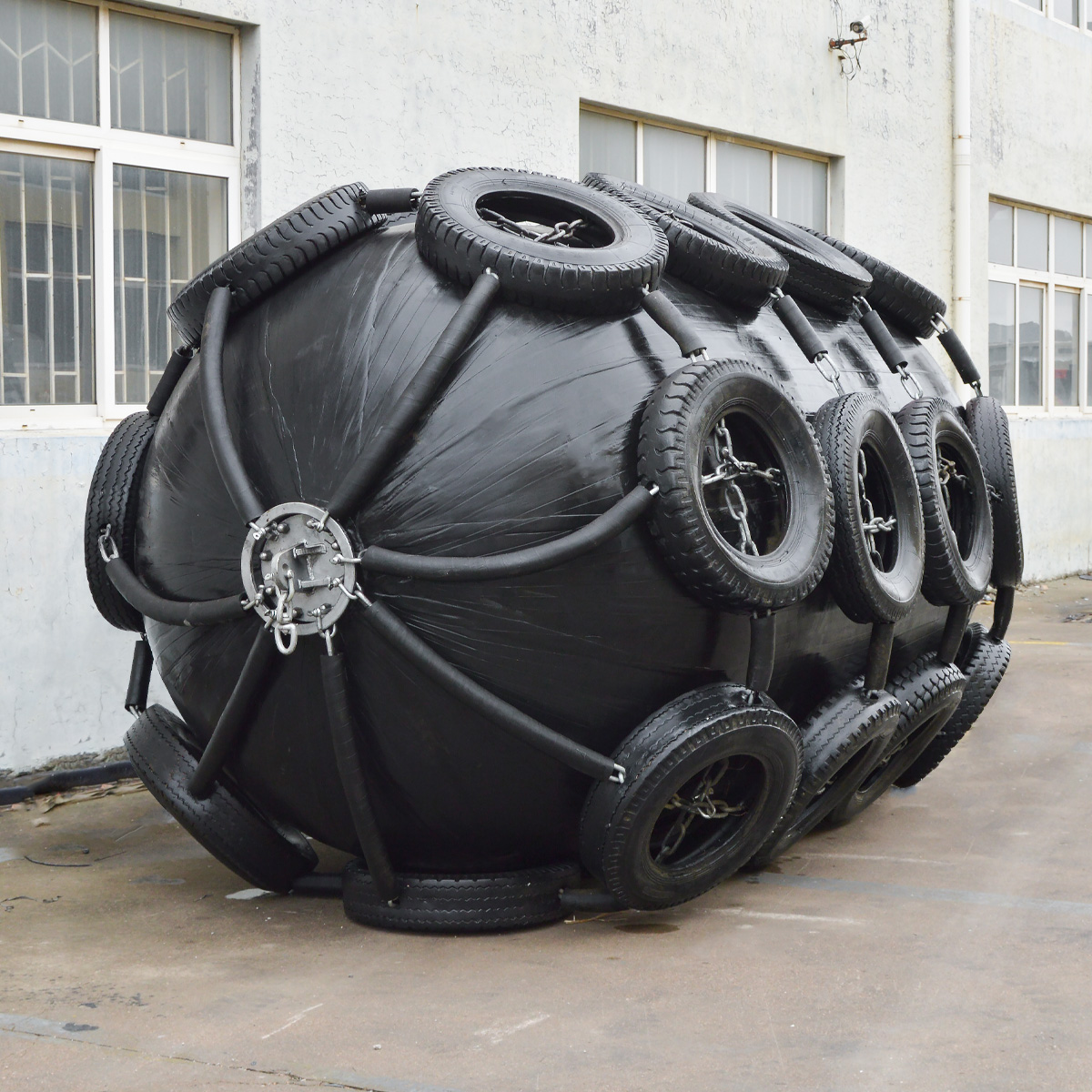
A pneumatic rubber fender is an inflatable marine fender made from natural rubber and cord fabric. It absorbs berthing energy by compressing air and deforming the rubber body. The working pressure is generally between 0.1 and 0.3 MPa, and it can be adjusted according to the usage environment. This type of fender is used as a marine fender, ship fender, boat fender, inflatable dock fender, or heavy-duty pneumatic fender depending on the project site.
For project specification, the critical parameters are diameter, length, and working pressure. Diameters range from 300 mm to 2000 mm. Lengths are customizable, typically from 1 meter to 10 meters. The applicable industries include ports and docks, ship mooring, offshore platforms, inland river docks, and temporary mooring.
The product is designed for high elasticity, corrosion resistance, and durability. It is lightweight and easy to install. Project applications may require operation in extreme temperatures from -20°C to +60°C. For dock protection applications, the fender system can operate automatically 24/7 and requires an air compressor. When project teams compare inflatable boat fenders, inflatable dock fenders, and heavy-duty ship fenders, the working pressure and material specification determine whether the selected product fits the actual operating scenario.
Step-by-Step Breakdown
- Define the berthing scenario. Classify the project as ship-to-ship, ship-to-dock, offshore platform, inland river dock, or temporary mooring. This defines the primary protection target, the impact direction, and the operating parameters that matter most.
- Document environmental limits. Record the expected temperature range, coastal salt exposure, tidal cycles, and extreme weather risk. If the site can reach -20°C or +60°C, the fender must be able to operate in that range.
- Review installation and handling constraints. Lightweight and easy-to-install fenders reduce downtime and labor cost, especially in temporary mooring or retrofit projects.
- Confirm air supply and operational mode. For dock protection, the fender system may require an air compressor and can operate automatically 24/7. Verify that the site has the required utilities and maintenance support.
- Select dimensions and working pressure. Choose the diameter, length, and pressure based on vessel size and berthing geometry. The standard product range covers 300 mm to 2000 mm diameter, 1 m to 10 m length, and 0.1 to 0.3 MPa working pressure.
- Verify standards and quality control. Floating pneumatic rubber fenders should comply with ISO 17357-1:2014 for high-pressure fenders and ISO 17357-2:2014 for low-pressure fenders. For supplier evaluation, confirm quality-control procedures such as 100 percent testing.
Use Cases
Project Reference: Engineering Contractor, China
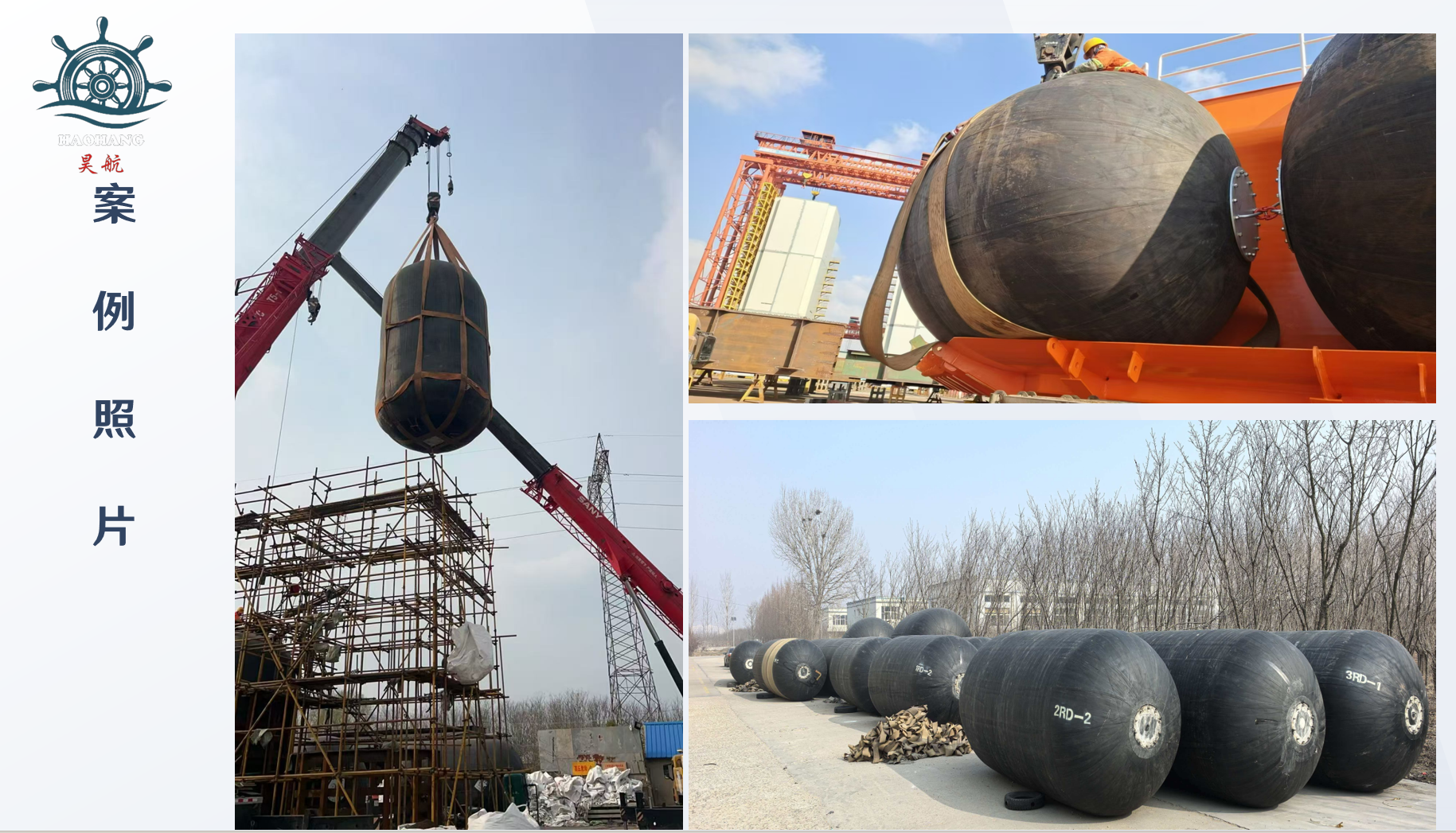
An engineering contractor in China used 50 units of pneumatic rubber fenders for berthing operations. The fenders protected vessels and dock structures during berthing. The project ran for five years. According to the project record, the fenders withstood extreme weather and high-frequency berthing. The performance highlight was high corrosion resistance in China's coastal marine environment.
This case is relevant to project teams because it provides a real-world example of fenders operating under repeated impact and coastal exposure. It also supports the decision logic that corrosion resistance and durability are essential in marine environments.
Comparison Table: Project Scenario Selection Matrix
| Scenario | Primary Protection Target | Key Functional Requirement | Relevant Product Data |
|---|---|---|---|
| Ship-to-ship (STS) | Vessel hulls during transfer operations | High elasticity, durability, and automatic 24/7 operation with an air compressor | Working pressure 0.1-0.3 MPa; natural rubber and cord fabric |
| Ship-to-dock (STD) | Dock structures and vessels during berthing | Corrosion resistance, lightweight, and easy installation | Diameter 300-2000 mm; length 1-10 m |
| Offshore platform | Platform structures and supply vessels | Extreme temperature operation from -20°C to +60°C; high elasticity | Temperature-capable product range; corrosion-resistant construction |
| Inland river dock | Dock structures and river vessels | Adjustability, durability, and corrosion resistance | Customizable length up to 10 m |
| Temporary mooring | Temporary structures and vessels | Lightweight, easy installation, and adjustability | Lightweight design; portable installation |
Frequently Asked Questions
Do pneumatic rubber fenders need to meet ISO standards for project acceptance?
Yes. Floating pneumatic rubber fenders must comply with ISO 17357-1:2014 for high-pressure fenders and ISO 17357-2:2014 for low-pressure fenders. Buyers should request documentation from the supplier before finalizing a project specification.
Can pneumatic rubber fenders be customized for a project's size and branding?
Yes. Qingdao Haohang Fender Airbag Co.,Ltd offers OEM/ODM production with size and logo customization. The MOQ is one unit, and monthly production capacity is 150 units.
What service life can project teams expect from pneumatic rubber fenders?
According to market data, pneumatic fenders typically last 5 to 7 years under consistent tidal cycles. Foam-filled fenders can last 8 to 10 years in saltwater conditions. In project planning, corrosion resistance and durability directly affect lifecycle cost.
Can a single fender be ordered for testing or project qualification?
Yes. The MOQ is one unit, which allows project teams to order a single test unit. Quality control includes 100 percent testing. Buyers can also request the company brochure for detailed product and specification information.
What lead time is realistic for pneumatic rubber fender project orders?
For Qingdao Haohang Fender Airbag Co.,Ltd, lead time is 7 to 45 days depending on order size and customization. Monthly production capacity is 150 units. After-sales support includes remote support and on-site support. For a project-specific timeline, contact the sales team at ella@qdhaohang.com or WhatsApp +86 15806273885.
Conclusion
Selecting a rubber fender for a marine project should start with the scenario, not just the brand. Define the berthing mode, environmental limits, installation constraints, air supply, and compliance requirements. Then match the fender's diameter, length, working pressure, and material performance to those conditions.
Qingdao Haohang Fender Airbag Co.,Ltd produces pneumatic rubber fenders for ports, docks, ship mooring, offshore platforms, inland river docks, and temporary mooring. The company supports OEM/ODM customization, an MOQ of one unit, 100 percent testing, remote support, and on-site support.
For a fender specification matched to your project scenario, download the company brochure or contact the sales team.
Download Qingdao Haohang Company Brochure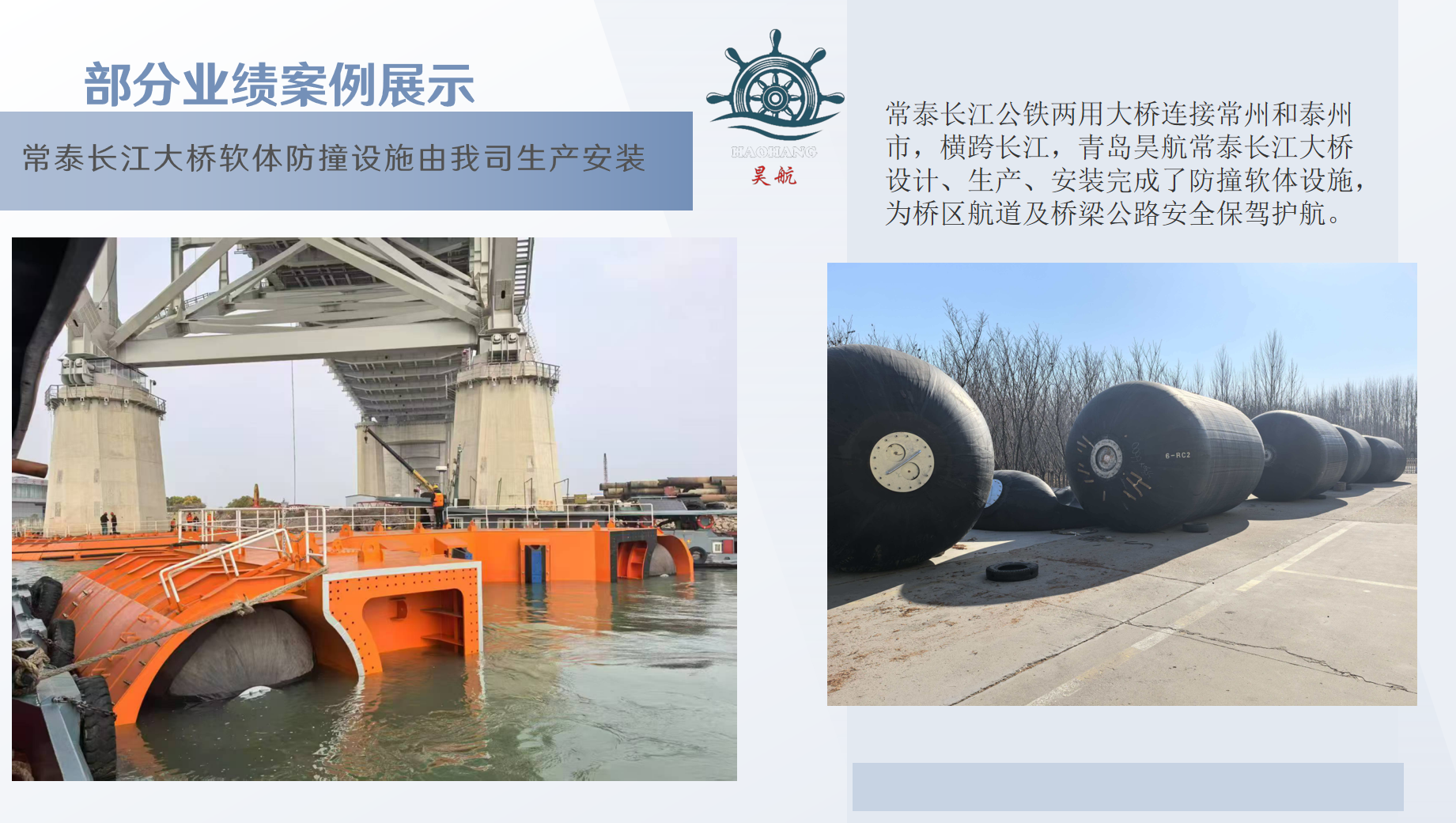
Email: ella@qdhaohang.com | WhatsApp/Tel: +86 15806273885
Address: Jinyuan 2nd Road, Jinkou Industrial Park, Jimo District, Qingdao, China
Have Questions or Need More Details?
Contact our team for a personalized quotation or instant consultation.
Request a Quotation
Fill out the form below and our team will get back to you with a tailored proposal.
WhatsApp Direct Chat
Prefer to chat in real-time? Message us on WhatsApp for instant assistance & quick answers.
- Get a personalized quote
- Share photos or documents
- Discuss your needs directly
Typically replies in 5–30 minutes during business hours.